Beach Season Mykonos
The beach season in Mykonos runs from mid-May through early October, with June through September offering the best combination of warm water, open beach clubs, and reliable swimming conditions.
Swim at Rhenia, eat lunch aboard and explore Delos in one 5–6-hour outing. Discover Rhenia and Delos sailing trip ↗
The practical beach season runs from mid-May through early October. The sea reaches comfortable swimming temperatures (above 20°C) in June and stays warm through October. Beach clubs open in late April to mid-May and close between late September and mid-October. Peak beach season is June through August, with September offering the warmest sea temperatures of the year alongside thinner crowds and lower prices. The meltemi winds in July and August make north coast beaches rough; south coast beaches stay sheltered. Bring SPF 50 minimum, a wind-proof hat, multiple swimsuits, and a proper linen cover-up for beach clubs.
| January–March | 13-15°C | 15-16°C | No | Not beach season |
| April | 18-20°C | 16-17°C | A few opening late April | Cool but exploratory walks good |
| May | 22-24°C | 19-21°C | Most open mid-May | Good shoulder season; sea cool-ish |
| June | 25-27°C | 21-23°C | All open, full programme | Excellent: warm, calm, no meltemi |
| July | 28-29°C | 23-24°C | Full capacity, peak DJ season | Peak energy; meltemi affects north coast |
| August | 29-30°C | 24-25°C | Full capacity + special events | Hottest, busiest, strongest meltemi |
| September | 25-26°C | 24-25°C | All open until late Sept | Best overall: warmest sea, fewer crowds |
| October | 20-22°C | 22-23°C | Most closing mid-Oct | Early Oct still excellent; late Oct patchy |
| November–December | 14-17°C | 18-20°C | No | Off-season; beach infrastructure closed |
Booking choice: Choose the live English guide option for guided Delos. Admission and optional pickup cost extra. Confirm meeting point the day before; swimming uses a ladder. Check dates for Rhenia and Delos sailing trip ↗
When Is Beach Season in Mykonos?
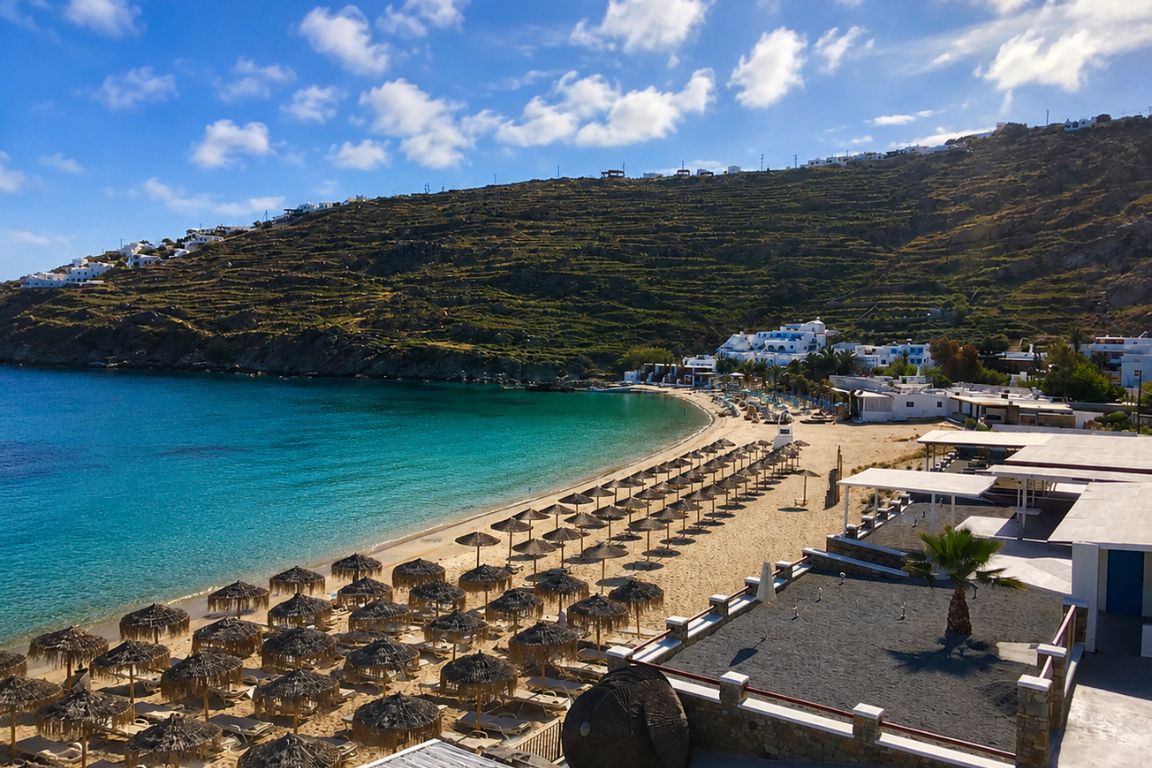 The practical beach season in Mykonos runs from mid-May through early October. This is when the combination of air temperature, sea temperature, and open beach club infrastructure makes a genuine beach holiday possible. Within that window, June through September is the core season. The sea is warm from June onward and stays warm well into October. Peak season is July and August. The shoulder season sweet spots are late May and September, where beach conditions are good to excellent and crowds and costs are both significantly lower than peak.
The earliest the island shifts into genuine beach mode is mid-May, when sea temperatures climb above 19°C and the first beach clubs open for the season. Before mid-May, the weather is pleasant and the island is accessible, but the sea is cooler than most visitors expect from a Mediterranean destination, and the beach club infrastructure that defines the Mykonos beach experience is not yet running. A Mykonos trip in April is good for walking, cultural exploration, and quiet, but it is not a beach holiday in the conventional sense.
The latest the island sustains genuine beach season is early October. The first three weeks of October consistently offer warm sea temperatures, reasonable weather, and most of the south coast beach infrastructure still operating. By the final week of October, beach clubs have largely closed, the water has cooled to the mid-low twenties, and the island has begun its winter transition. Planning a beach holiday in October means targeting the first two weeks specifically.
From our experience guiding over 13,500 travelers through the island since 2012, the best first-time beach visits are in June or September. Both months offer the full beach experience without the intensity of August or the uncertainty of the shoulder period edges at either end of the season.
What Are the Best Months for the Beach in Mykonos?
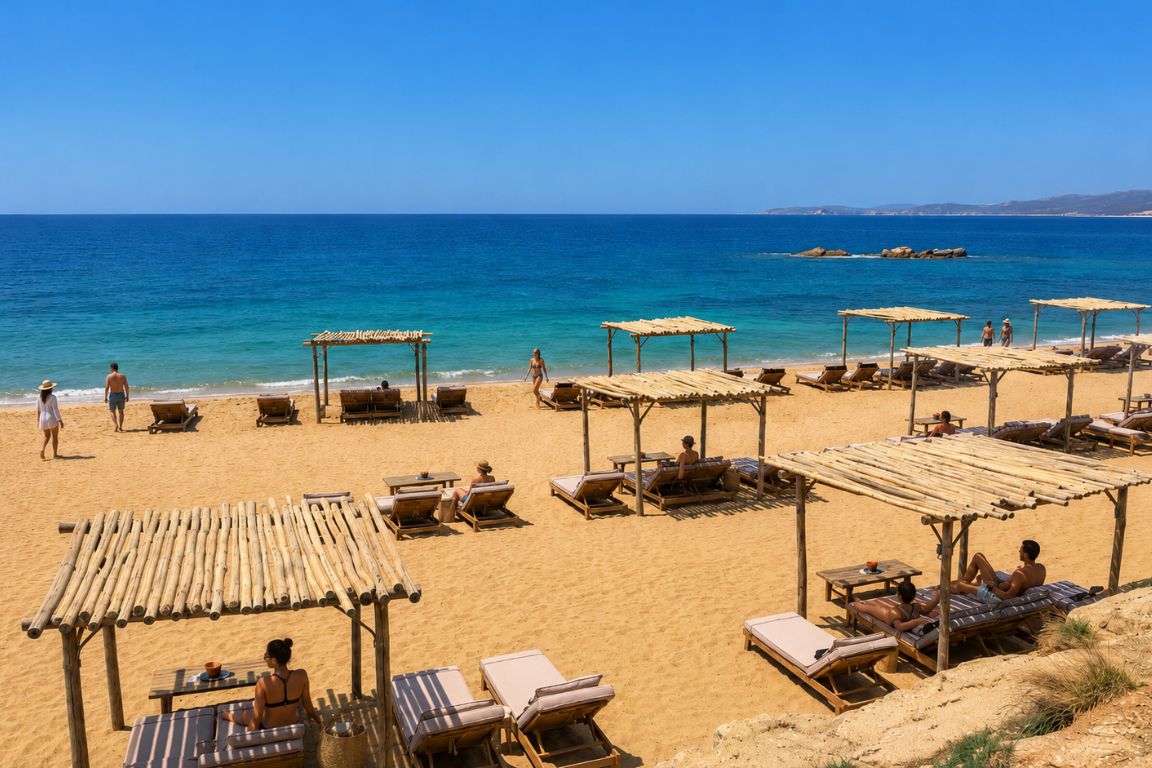 September is the strongest overall beach month: sea temperatures reach their annual peak of 24-25°C (warm even by Mediterranean standards), the meltemi winds have eased, crowds are meaningfully thinner than August, prices on accommodation drop 20-40%, and every major beach club and restaurant is still open. June is the best month for the full summer beach club experience without the peak-season intensity. Late May is the best value window for travelers prioritizing cost over absolute warmth.
September earns its reputation among experienced Mykonos travelers for a specific reason: the Aegean holds its heat. Two months of July and August sun warm the water to its peak, and that warmth stays through September without the crowds, wind, or cost that came with the summer months. Walking onto a Mykonos south coast beach in mid-September, you find sun beds more available, the water at its warmest, the service faster, and the music a few degrees quieter than August. The beach clubs are still fully running and still hosting their closing party programmes, which are events in themselves. This is the month where the quality-to-cost ratio of a Mykonos beach day is at its highest point of the year.
June works differently but equally well. Everything is open, everything is running, the sea is at 21-23°C (properly swimmable and genuinely warm for most people), and the meltemi has not yet arrived in force. The crowds are present but manageable, particularly in early June before European school holidays begin. Beach club reservations at Scorpios and Nammos are more available in June than in July or August. The DJ programme is starting to fill in but has not yet reached the density of peak season. For the traveler who wants the full Mykonos beach club experience in a form that does not require fighting for a sunbed, June is the answer.
Late May is the value window: air temperatures in the low-to-mid twenties, sea at 19-21°C (on the cool side but genuinely swimmable for most visitors), beach clubs opening up, and accommodation running 40-50% below peak August rates. The trade-off is a sea that some visitors find cooler than expected, particularly in early May, and a nightlife scene that has not yet hit full stride. For travelers who prioritise value and calm over absolute warmth, late May is excellent.
Want to know which season delivers the most out of a Mykonos visit without paying July prices for everything? Here’s our best time to visit Mykonos tours guide so you don’t book the wrong time of year.
What Is the Sea Temperature in Mykonos by Month?
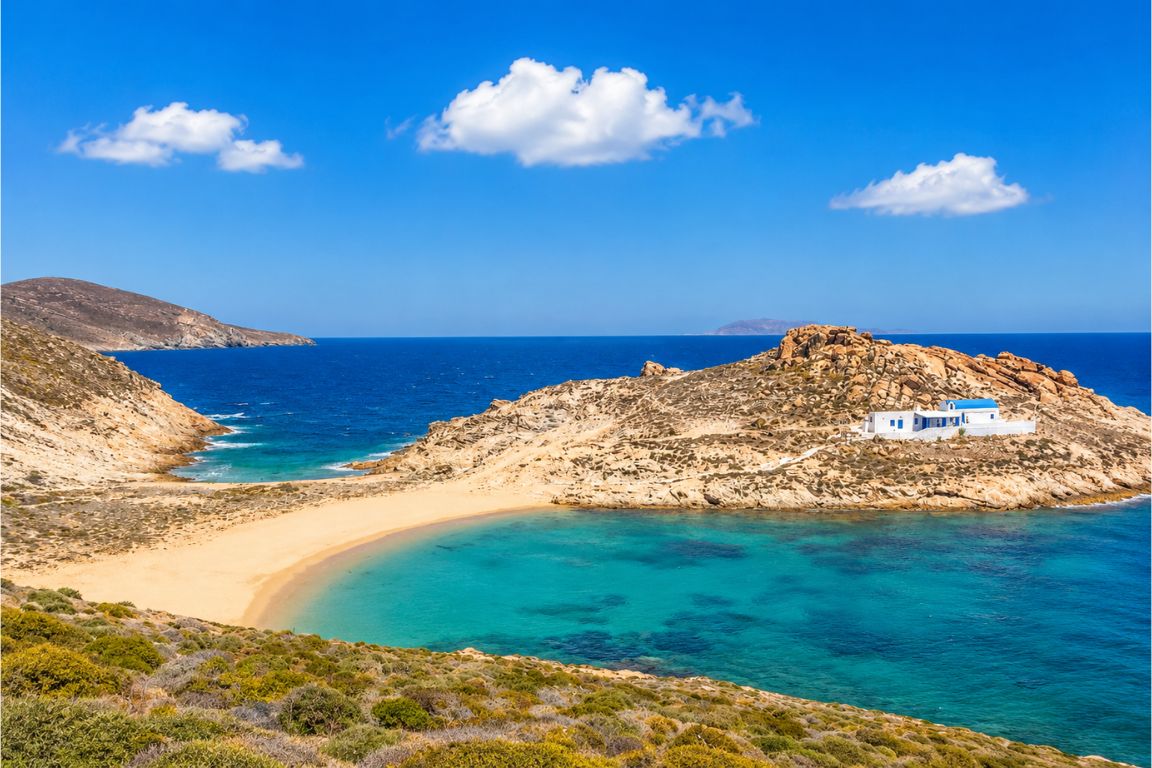 The Aegean around Mykonos averages 15-16°C in winter, climbs to 19-21°C by May, reaches 23-25°C at peak summer, and holds above 20°C through November. The warmest sea temperatures of the year occur in late August and September, not July. For most people, 20°C is the practical lower limit for comfortable casual swimming; 22°C and above is genuinely warm for extended beach days. Below 18°C is cold for anyone not acclimatised to cool water.
The sea temperature data that matters most for planning a beach holiday is the practical swimming threshold rather than the exact degree. Here is how the Mykonos sea temperature translates into real beach experience by month:
| January-March | 15-16°C (59-61°F) | Very cold; risk of hypothermia in extended swims | Cold-water enthusiasts only |
| April | 16-17°C (61-63°F) | Cold; brief dips possible but not comfortable | Those acclimatised to cold water |
| May | 19-21°C (66-70°F) | Cool to fresh; manageable for most, bracing for some | Most adults comfortable for moderate swims |
| June | 21-23°C (70-73°F) | Warm; genuinely pleasant for long beach days | Almost all travelers comfortable |
| July | 23-24°C (73-75°F) | Very warm; ideal beach conditions | All travelers, including young children |
| August | 24-25°C (75-77°F) | At or near peak warmth; exceptional swimming | All travelers; warmest casual swimming of the year |
| September | 24-25°C (75-77°F) | Peak annual warmth; warmest swimming of the year | All travelers; best swim conditions of the year |
| October | 22-23°C (72-73°F) | Still warm; comfortable beach days in early October | Most adults comfortable; cooler for young children |
| November | 19-20°C (66-68°F) | Cooling; short swims manageable but less comfortable | Those who tolerate cooler water |
The counterintuitive finding that most visitors are surprised by: September, not August, has the warmest sea temperatures. The water temperature lags behind air temperature by roughly a month: the cumulative heat of July and August only reaches its peak in the water toward the end of August and through September. This is why experienced Mykonos travelers, who understand the rhythm of the Aegean, rate September so consistently as the best beach month despite the summer having officially peaked.
When Do Beach Clubs Open and Close in Mykonos?
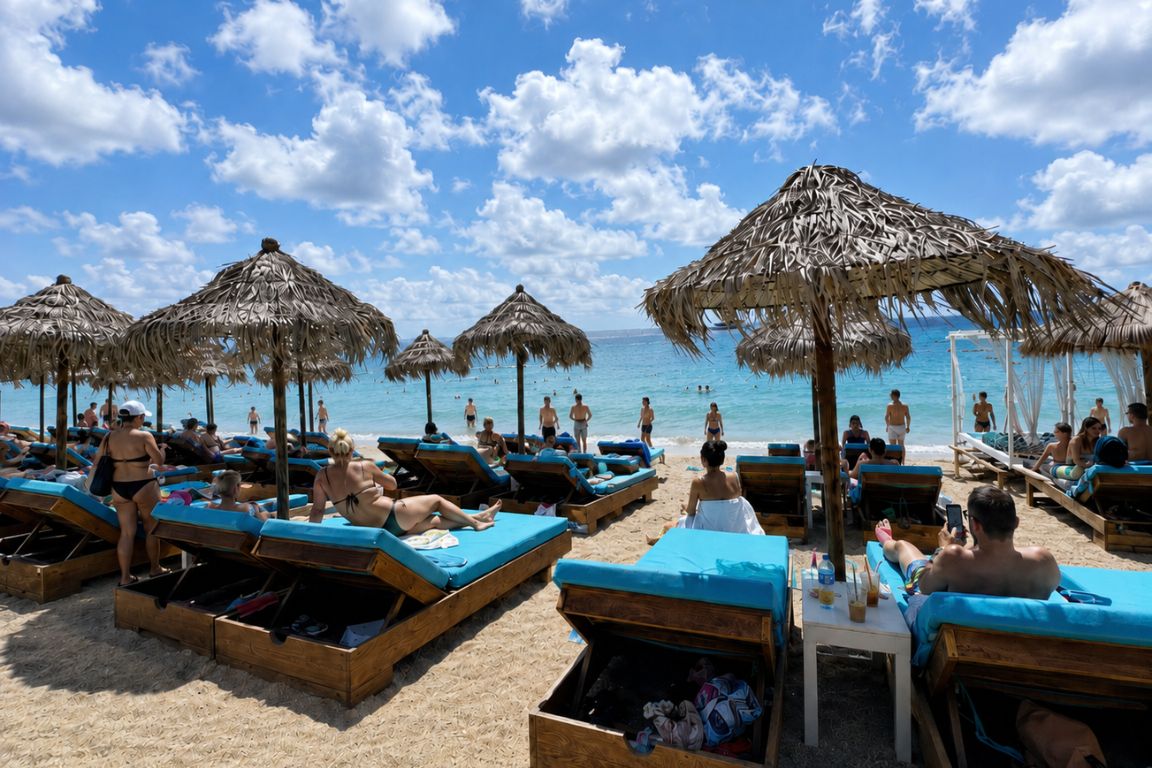 Most major beach clubs open between late April and mid-May and close between late September and mid-October. Alemagou typically opens first, around mid-to-late April. Scorpios opens in mid-May (May 11 in 2025). Nammos and SantAnna follow in the same window. Tropicana at Paradise Beach opens late April. Full season programming, meaning complete DJ schedules, headline acts, and peak pricing, runs from June through late September. Before and after those months, clubs operate but at reduced programming and sometimes reduced hours.
The opening of beach clubs marks the real start of the Mykonos summer more accurately than any calendar date. When Nammos opens for the season on Psarou Beach, typically in the second week of May, it signals to the island that the year is in motion. The opening weekends draw early-season visitors and the yachting crowd who have been waiting for the infrastructure to come online. Scorpios typically opens in the second week of May as well, and SantAnna and the other Paraga venues follow within a week or two.
The closing schedule matters as much as the opening dates for travelers planning the end of their season. Most premium venues run closing parties in late September or early October, which are events in their own right: the final Scorpios sunset ritual of the season, the last weekend at Nammos before the boats are covered for winter. Tropicana at Paradise Beach and Jackie O’ at Super Paradise run later into October than the premium venues. By mid-October, most beach clubs are closed entirely.
The transition between pre-season and full season is worth understanding for late May visitors. A Scorpios visit in mid-May has the same view and the same food quality as a Scorpios visit in August, but the DJ programme is quieter, reservations are easier to secure, prices are lower, and the Sunset Ritual is running on a lighter schedule. For some travelers this is the ideal version of the experience. For others, it is not quite what they came for. Know which camp you are in before you book.
Want to know which Mykonos beach clubs are actually worth the reservation and the price tag versus which ones trade entirely on reputation? Here’s our best beach clubs in Mykonos tours guide so you spend your day in the right place.
What Are the Best and Worst Months for Beach Weather in Mykonos?
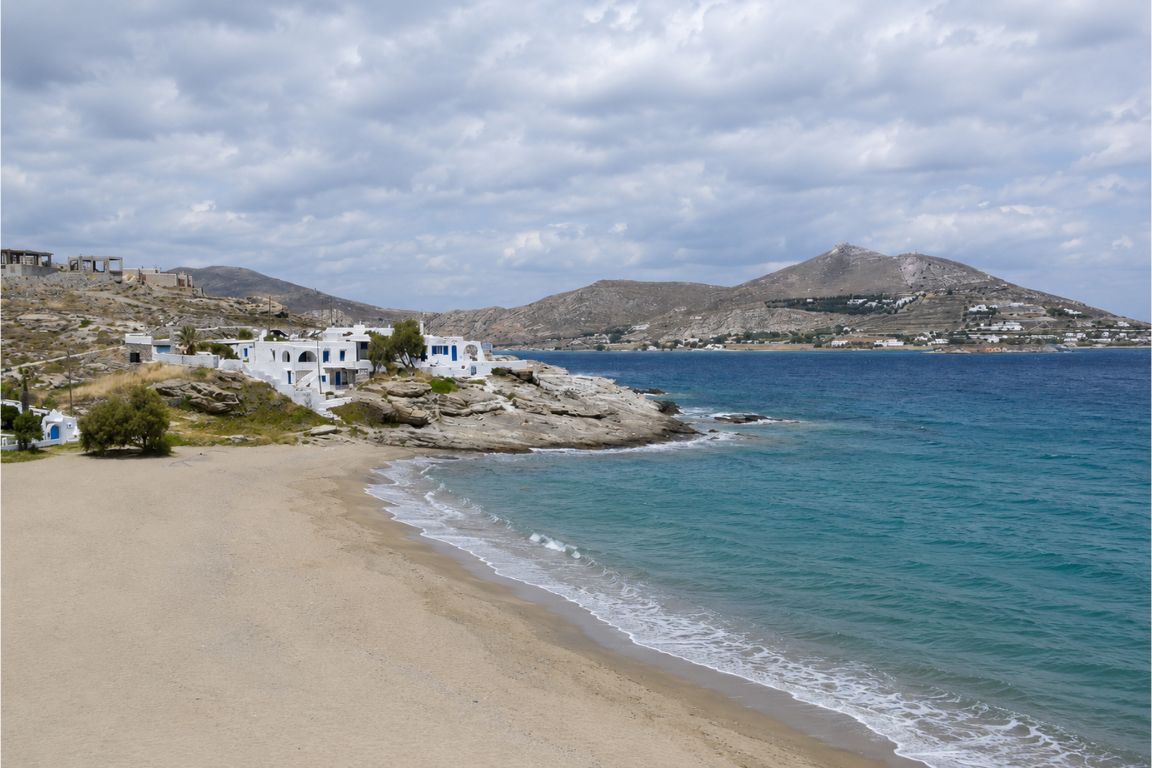 Best months for beach weather: June for the ideal combination of warmth and calm; September for the warmest sea and easing crowds. Worst months: January through March (cold, wet, most infrastructure closed); late October through November (cooling, beach clubs shut, patchy weather). The genuinely underrated months are late May and early October: both offer real beach conditions, significantly fewer crowds, and a meaningfully cheaper trip than peak summer delivers.
June is the closest thing to an ideal beach weather month that Mykonos offers. Average highs reach 25-27°C. The sea sits at 21-23°C. Sunshine hours are at their annual maximum, with around 13 hours of daylight near the solstice. Rain is essentially absent: June averages zero to one rain days. The meltemi wind has not yet arrived in force, so all beaches across the island, north and south, are accessible and calm. Everything is open and fully operational. The DJ programme at the clubs is building but not yet at peak density. The balance of warmth, calm sea, and functional infrastructure without peak-season crowds makes June the month most consistent local experts recommend when asked.
The genuinely worst beach weather months are winter, which is not surprising: January through March brings temperatures in the low-to-mid teens, sea temperatures below 16°C, and five to ten rain days per month. The beach clubs are closed, the beaches are empty, and the island is in its genuine off-season mode. This is not a beach destination between November and March for anyone who came for sun, sea, and a beach club day.
The more useful comparison is between the peak months and the shoulder months within the beach season itself. July and August deliver maximum sun, maximum warmth, maximum energy, and maximum meltemi wind intensity and crowd density. The beach experience in peak summer is at its most complete and also at its most pressured: every sunbed in demand, every club reservation requiring weeks of advance planning, every taxi scarce. September delivers everything that July and August offered in warmth terms, with the pressure reduced. For travelers making their first choice of beach holiday timing, that trade-off is consistently clear.
A first trip to Mykonos needs different planning than a return visit and the priorities look very different once you know what the island actually delivers – our Mykonos tours for first-time visitors guide breaks down exactly where to focus your limited time and budget.
How Does the Meltemi Wind Affect Beach Season?
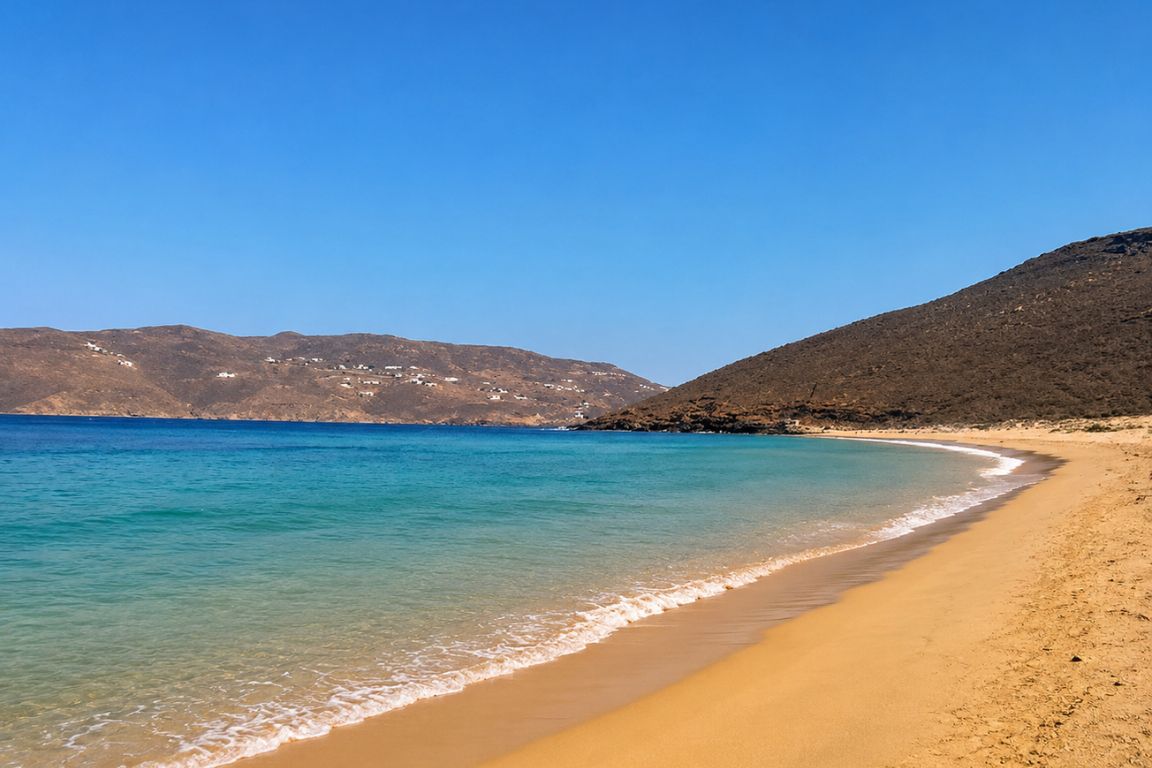 The meltemi, a strong north wind that blows across the Aegean from late June through early September, is the defining weather variable of Mykonos beach season. It makes north-facing beaches uncomfortable on strong wind days, keeps south-facing beaches sheltered and swimmable, and can cancel or delay water taxi and catamaran services. On most July and August days, south coast beaches are the correct choice. On strong meltemi days, north coast beaches range from rough to unusable. The meltemi is also why June and September are often more pleasant beach months than peak summer despite the slightly cooler conditions in June.
The meltemi blows from the north and northwest, pushed by pressure patterns between the Balkans and the eastern Mediterranean. It arrives in late June, peaks in July and August, and fades through September. The island’s mass provides natural shelter for the south coast: beaches facing south and southwest (Ornos, Platis Gialos, Psarou, Paraga, Paradise, Super Paradise, Elia) stay significantly calmer than beaches facing north (Panormos, Ftelia, Agios Sostis). On a Beaufort 5 or 6 day in August, the difference between Ornos Beach and Panormos Bay is the difference between a pleasant afternoon and an afternoon spent holding your hat and getting sand in your food.
For beach planning in July and August, the practical rule is simple: check the forecast and default to south coast beaches unless the forecast shows calm or light wind. The MeteoBlue app and Windfinder both give reliable 48-hour Mykonos wind forecasts. On strong meltemi days (Beaufort 6 and above), the north coast is not worth visiting for a beach day. On calm days, which do occur even in August, the north coast beaches (Agios Sostis, Fokos, Panormos) offer some of the most beautiful and uncrowded swimming on the island.
The meltemi also makes the June and September windows more attractive than a bare temperature comparison suggests. In June, the wind is not yet established in force: all beaches across the island are accessible. In September, it has largely eased: the same all-island accessibility returns. The months on either side of peak summer are bookended by genuinely calm conditions that the peak months cannot guarantee.
We’ve put together a full beach breakdown in our best beaches in Mykonos tours guide so you know exactly which ones to prioritize, how to get there, and what to expect from the crowd and the facilities.
What Should You Pack for a Mykonos Beach Holiday?
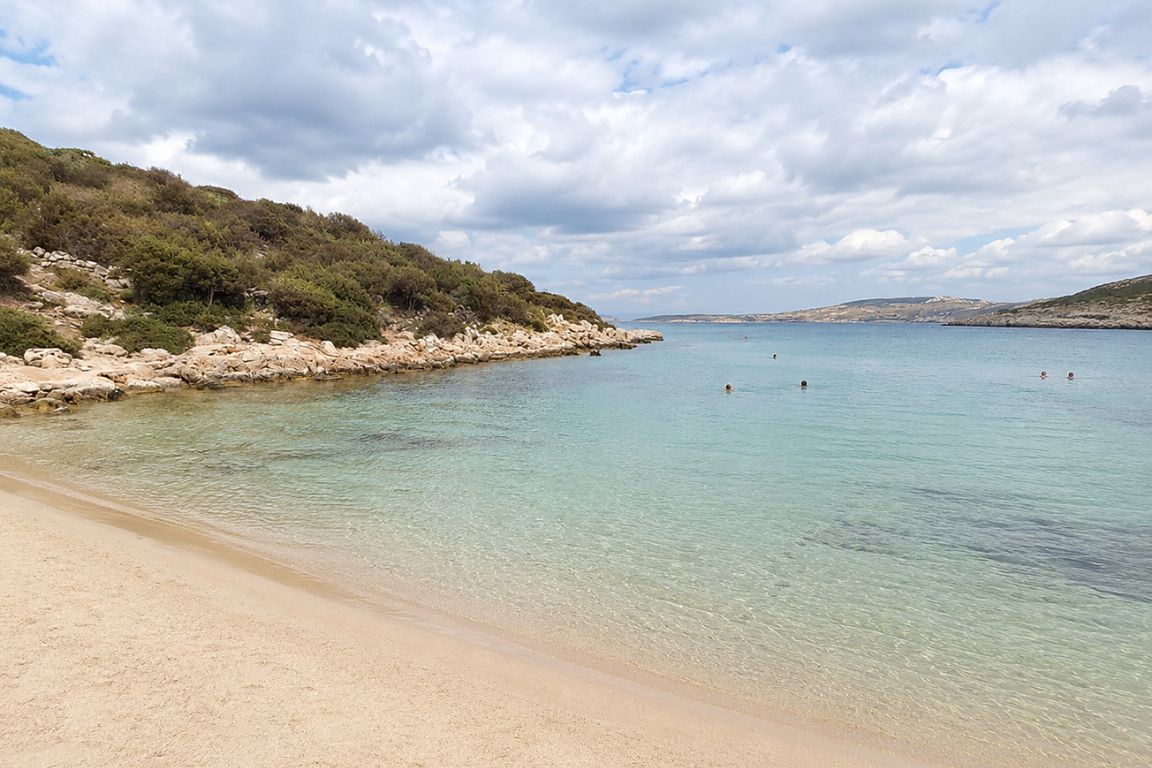 The Mykonos beach packing list has a few non-negotiable items that most visitors underestimate: SPF 50 or higher sunscreen from home (expensive and limited in reef-safe options on the island), multiple swimsuits (you will want a dry one available most days), a wind-proof hat with a chin strap or tie, polarised sunglasses (the Aegean reflection is intense), and at least one proper linen or light cover-up for beach clubs, restaurants, and Chora. Leave the heavy evening wear at home. Bring more sunscreen than you think you need.
Sunscreen. The Mykonos sun is more intense than most northern European or North American visitors are prepared for, particularly between 11am and 3pm. SPF 50 minimum for face and shoulders. Reef-safe options are available on the island but expensive and sometimes hard to find in peak season; bring your preferred brand from home. Apply before you leave your accommodation, not when you are already on the sunbed. Reapply after every swim. A large bottle of sunscreen at a Mykonos beach club costs upward of €25.
Multiple swimsuits. Three to four is the right number for a four to five night trip. A day at a beach club typically means a wet swimsuit by noon and a preference for a dry one for the afternoon and evening. At premium beach clubs like Scorpios and Nammos, the swimsuit is visible and the standard of beachwear is genuinely fashion-forward. One good swimsuit matters less than having a dry option available throughout the day.
A wind-proof hat. The meltemi will remove an ordinary sun hat from your head with no warning. A wide-brimmed straw hat with a chin strap or an internal tie, or a bucket hat that sits more securely, is the practical choice for Mykonos. Polarised sunglasses protect your eyes from the Aegean sun reflection, which is significantly more intense than most visitors expect.
A cover-up for beach clubs and Chora. Swimwear is not appropriate in restaurants, at Panagia Paraportiani, or when walking through Chora even in peak summer. A light linen sarong, kaftan, or cover-up dress goes over a swimsuit from the beach to lunch to a walk through the town without requiring a full outfit change. For premium beach clubs, a good cover-up is also part of the “Mykonos chic” daytime look that fits the atmosphere at venues like Scorpios, Nammos, and SantAnna.
Comfortable flat sandals. Chora’s cobblestones are uneven and long. The beach path between Platis Gialos and Paraga is rocky in places. Heels are impractical for anything beyond a specific dinner venue, and even then, they require strategy on the uneven stone surfaces. Greek leather sandals from one of the small workshops in the alleys of Chora are among the best purchases on the island: comfortable, durable, and genuine to the setting.
A light layer for evenings. Even in July and August, the meltemi that cools the beach in the afternoon creates a genuine evening breeze. A light linen shirt or a thin wrap is enough in peak summer. For May and October, something warmer than a wrap is worth having: a light jacket for evenings when the temperature drops into the high teens.
Trying to figure out whether three days covers the best of Mykonos or whether a longer stay actually makes a meaningful difference? Check out our how many days do you need in Mykonos guide before you lock in your itinerary.
| Late May | Beautiful, calm, great value | Sea cooler than expected; some clubs not yet fully open |
| June | Best balance of everything | Rare complaints; occasionally wished for warmer sea |
| July | Full experience delivered | North coast beaches rough on windy days; should have stayed south |
| August | Loved it or found it too intense | Sand in face at exposed beaches; sunscreen ran out quickly |
| September | Best beach conditions of any month | Didn’t realize sea would be this warm; should have come earlier |
| Early October | Surprisingly good; warm sea, calm | Some clubs already closed; less dining choice in evenings |
Frequently Asked Questions
When does beach season start in Mykonos?
The practical beach season starts in mid-May, when sea temperatures reach 19-21°C and most major beach clubs open for the season. Before mid-May, the sea is cooler (16-17°C in April), the beach club infrastructure is limited, and the experience is more cultural exploration than beach holiday. The island is accessible from April but a genuine beach trip starts in mid-May.
When does beach season end in Mykonos?
The practical beach season ends in early to mid-October. Sea temperatures hold above 22°C through most of October, air temperatures stay pleasant, and beach clubs remain open through late September. By mid-October most clubs have closed, dining options reduce, and the island shifts toward its off-season character. Targeting the first two weeks of October gives you genuine beach conditions; the final week becomes more uncertain.
What month is the sea warmest in Mykonos?
Late August and September, when the sea reaches 24-25°C. Water temperature lags behind air temperature by roughly a month, so the cumulative heat of summer reaches its peak in the water toward the end of August and sustains through September. This makes September consistently the warmest month for swimming despite being after the technical summer peak.
Is Mykonos good for swimming in May?
Yes, though the sea is cooler than summer. May averages 19-21°C in the water, which most adults find manageable for beach swims though on the fresh side compared to July or August. The beach clubs are open from mid-May, the island is much less crowded than summer, and prices are 40-50% below peak. For travelers who tolerate slightly cooler water and prioritise value and calm, May is a genuinely good choice.
Which beaches in Mykonos are best during meltemi season?
South coast beaches are sheltered from the meltemi by the island’s mass: Ornos, Platis Gialos, Psarou, Paraga, Paradise, Super Paradise, and Elia all remain calm on most meltemi days. North coast beaches (Panormos, Ftelia, Agios Sostis) face directly into the wind and can be rough or uncomfortable when it blows strongly in July and August. On any day with a significant north wind forecast, stick to the south coast.
When do beach clubs close in Mykonos?
Most major beach clubs close between late September and mid-October. Closing parties typically run through the final weekend of September or the first weekend of October. Alemagou tends to close slightly earlier than the south coast venues. Tropicana and Jackie O’ at Super Paradise run into October more consistently than the premium clubs. By mid-October, most venues are closed until the following May season.
Greek tour guide since 2012 · Founder, Mykonos Tours
Alexandros has guided over 13,500 travelers through Mykonos and the Cyclades since founding the agency.
Your next step · optional experience
Match a beach day to your month
General recommendation — choose an option below to refine it.
Rhenia sailing and Delos visit
Check your date before arranging the rest of your day. Swim at Rhenia, eat lunch aboard and explore Delos in one 5–6-hour outing.
Choose the live English guide option for guided Delos. Admission and optional pickup cost extra. Confirm meeting point the day before; swimming uses a ladder.
Choose a date to view the published departure schedule. Final availability and price are confirmed on Viator.
Compare options, fit your day or calculate the cost
Swim at Rhenia, eat lunch aboard and explore Delos in one 5–6-hour outing. Choose the live English guide option for guided Delos. Admission and optional pickup cost extra. Confirm meeting point the day before; swimming uses a ladder.
Swim from a catamaran and enjoy a three-course meal, drinks and return transfers. 5 hours • English • Up to 25 guests. Rhenia or south coast depending on weather; no Delos landing. Tender boarding; bring a towel.
Reserve a sunbed at Thalas for a relaxed day beside Super Paradise’s clear water. Day use • Arrive 10am–noon; reservations released after noon. Food, drinks and transport extra. Towels included only in first/second rows. Accompanied minors only.
Pair the island drive with a guided walk through Mykonos Town. 3½ hours • English guide • Meet at New Port; hotel pickup excluded. Uneven walking and moderate fitness required.
We may earn a commission from bookings through these links. Your final price and booking conditions are shown by the provider.