Best Time to Visit Mykonos
The best time to visit Mykonos is late May, June, or September, when the island delivers beach weather, open venues, and a much better balance of cost, crowds, and overall experience.
Swim at Rhenia, eat lunch aboard and explore Delos in one 5–6-hour outing. Discover Rhenia and Delos sailing trip ↗
Late May and September are the strongest overall months: warm enough for full beach days, no meltemi wind problem, most venues open, and 20-40% cheaper than peak. June is the best month for the full summer experience without the August intensity. July and August deliver the highest energy but also the highest prices, biggest crowds, and strongest meltemi winds. Winter (November to March) is cheap but most of the island closes. The worst value is mid-August on a mid-range budget with no advance bookings.
| Early shoulder | April-May | 16-24°C | Low | 40-60% cheaper |
| Early summer | June | 25-27°C | Moderate | 20-30% cheaper |
| Peak | July-August | 27-30°C | Maximum | Peak pricing |
| Late shoulder | September-October | 19-26°C | Low-Moderate | 20-40% cheaper |
| Off-season | November-March | 10-16°C | Very low | 60-80% cheaper |
There is a version of Mykonos that belongs to the people who booked their August trip in February, paid for it cheerfully, and spent their beach days shoulder to shoulder with 300 other people waiting for a sunbed. There is another version that belongs to the couple who arrived on a Tuesday in late May, found a table at any restaurant they wanted, walked Matogianni Street at 10am without once stopping for someone else’s photograph, and paid half the hotel rate for the same room. Both versions are real. The question of when to visit determines which one you get.
Booking choice: Choose the live English guide option for guided Delos. Admission and optional pickup cost extra. Confirm meeting point the day before; swimming uses a ladder. Check dates for Rhenia and Delos sailing trip ↗
What Is the Best Month to Visit Mykonos?
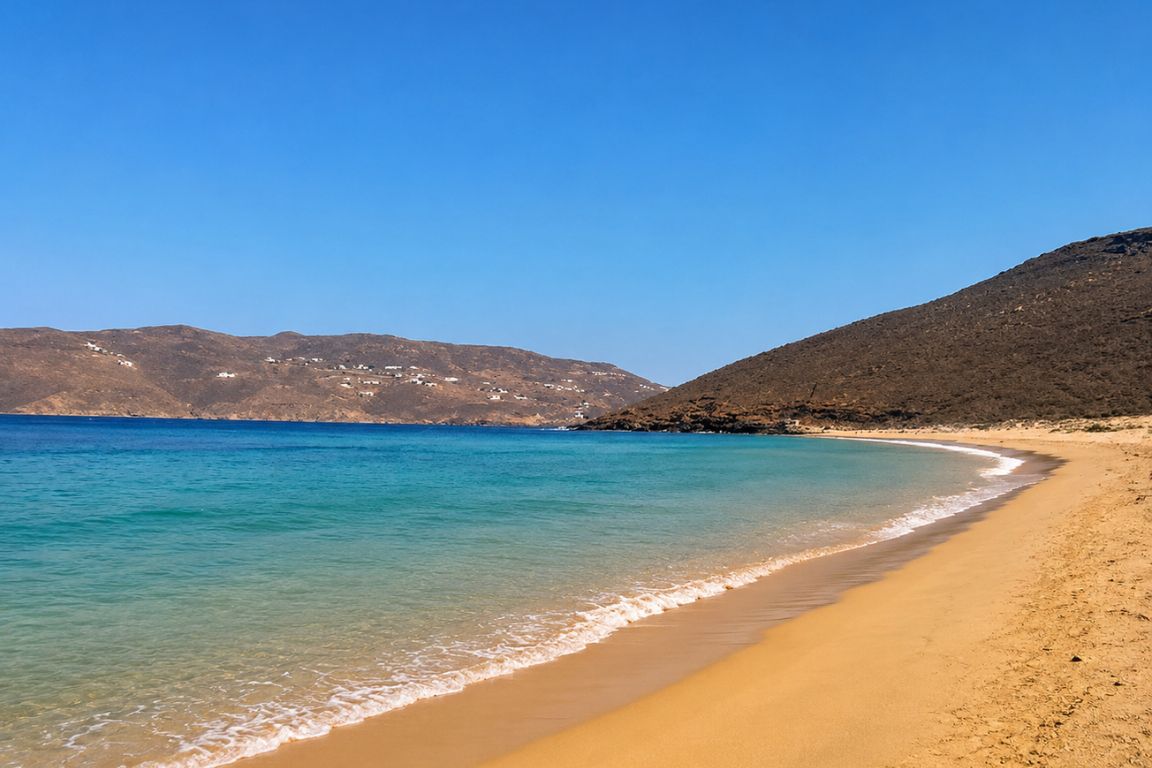 June is the best single month for most travelers: full summer energy, every beach club and restaurant open, warm enough for serious beach days, sea temperatures around 22-23°C, and the meltemi winds not yet arrived in force. Late May and September are close runners-up with fewer crowds and lower prices. The honest answer is that “best” depends on what you actually want from the trip.
June sits in an unusual pocket. The island is completely alive. Every venue that matters is open. The nightlife is running properly. Beach clubs have their full programmes in place. And yet the crowds have not yet reached the August intensity, the meltemi has not yet taken hold, and the hotel rates are noticeably lower than what they become in July. Locals who get asked this question privately tend to say June without hesitation. Early June especially, before the European school holidays push the volume up.
September makes a strong case for the opposite end of the summer. The Aegean reaches its warmest temperatures of the year, peaking around 24-25°C in late August and holding through most of September. The winds ease. The crowds thin. Hotel prices drop 20-40% from August highs. The beach clubs and restaurants are still fully open. You can walk through Chora without it feeling like a festival crowd. For anyone whose travel dates are flexible, September is consistently the month where the island’s quality-to-cost ratio is at its highest.
Late May works similarly on the other end: low crowds, good value, everything mostly open, weather warm enough for confident beach days from mid-May onward. The sea is cooler than summer (around 19–21°C), which matters to some and not at all to others.
When Should You Visit Mykonos in Summer?
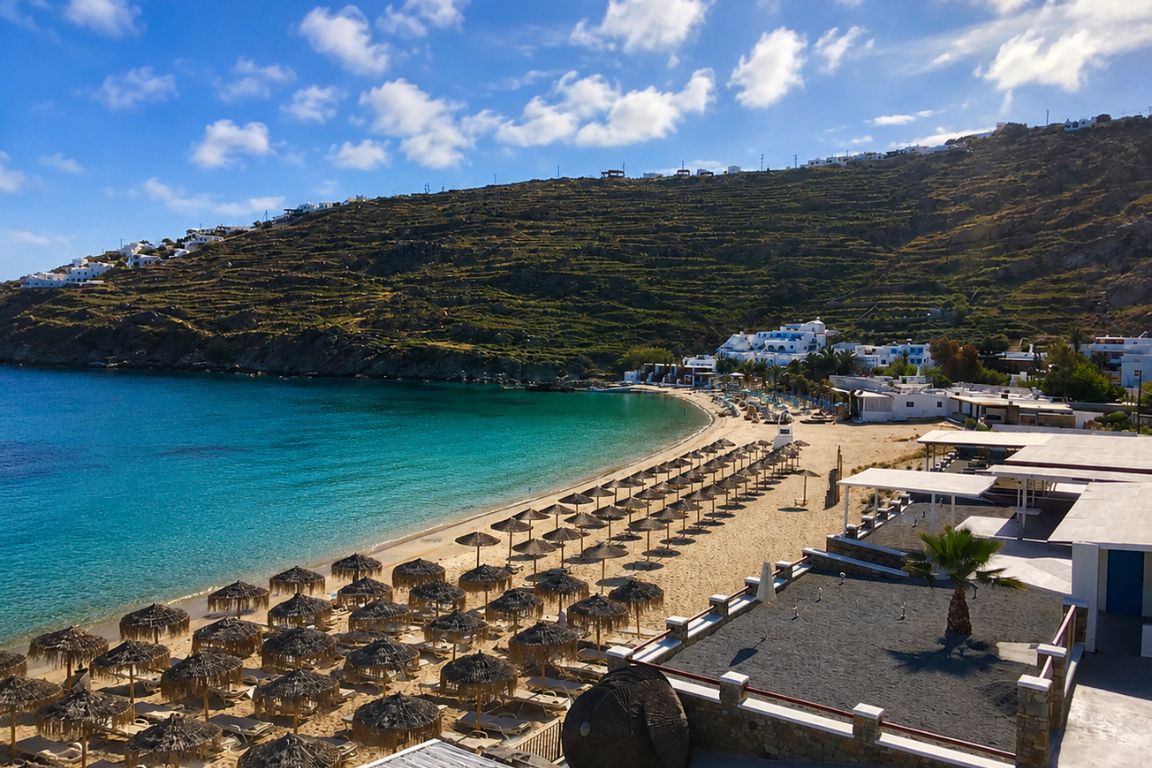 If you’re coming in peak summer, June outperforms July and August on almost every measure except raw energy and water temperature. July delivers the full Mykonos experience at full volume: packed beaches, non-stop nightlife, meltemi winds blowing hard, and prices at their highest. August is July turned up another notch. If the party atmosphere is the whole point, August is justified. If you want summer without maximum intensity, June is the answer.
July is when the meltemi arrives in force. The winds blow from the north, typically reaching 30-40 knots on stronger days, and they define the beach experience. Northern beaches like Panormos and Ftelia take the worst of it: choppy water, sand in your face, sunbeds turning into projectiles on bad days. Southern beaches like Psarou, Ornos, Platis Gialos, and Paradise are sheltered by the island’s geography and stay significantly calmer. Beach planning in July means knowing which direction you’re facing.
August is the peak of everything Mykonos is and everything it can be faulted for. The Mykonos XLSIOR Festival, one of Europe’s most well-known LGBTQ+ events, takes place in late August. The beach clubs are at full capacity every day. Scorpios and Nammos are booked weeks out. Taxis are scarce and expensive. The alleys of Chora in the afternoon are a slow-moving crowd. For the right traveler with advance planning and the right budget, August in Mykonos is a genuine event. For anyone who didn’t plan far enough ahead, it can be a frustrating and expensive version of what the island could have been.
Want to experience Mykonos’s famous beach club scene without wasting a full day at the wrong one? Here’s our best beach clubs in Mykonos tours guide so you pick the right one for your vibe.
Is Mykonos Worth Visiting in Shoulder Season?
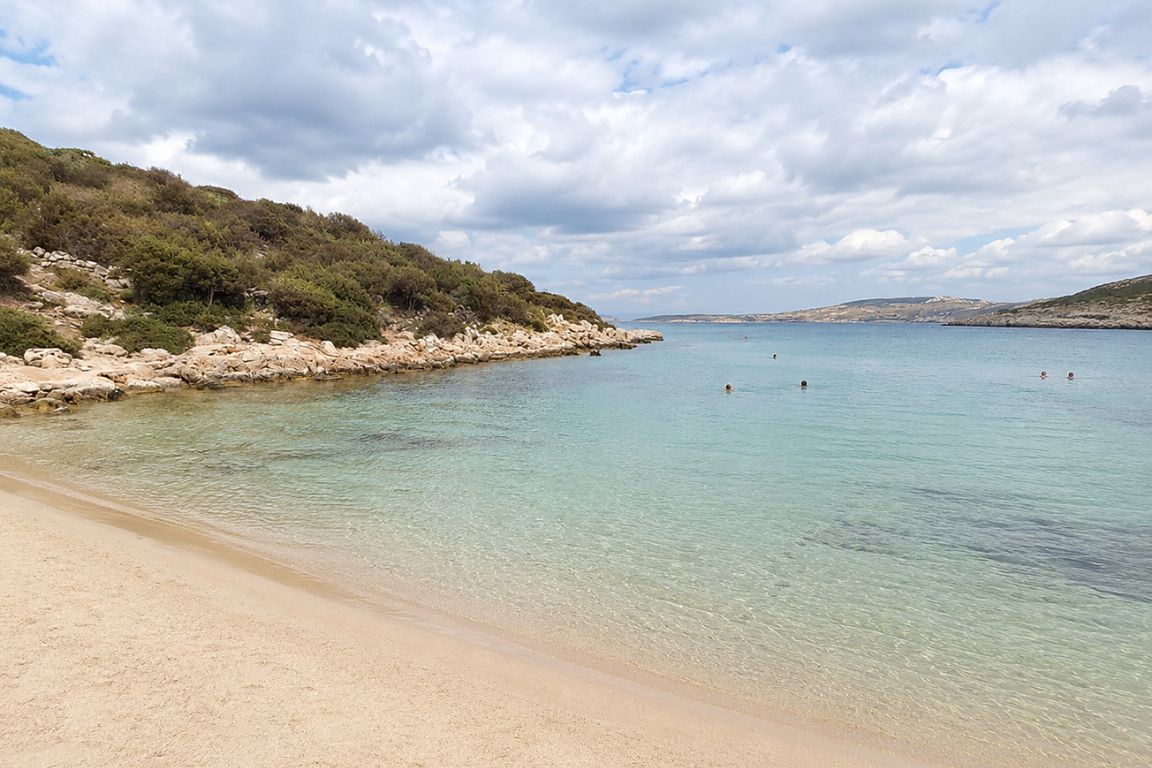 Yes, clearly. Late May, June, and September offer the strongest combination of good weather, open infrastructure, manageable crowds, and meaningful savings on accommodation. April and October are worthwhile for travelers who prioritize quiet exploration over beach days. The island is genuinely beautiful in shoulder season in ways that peak crowds can obscure.
May is when the island opens properly. April is sometimes called a “soft opening”: restaurants and shops emerge gradually, beaches are accessible but quiet, and the sea is cool. By mid-May everything is running. The wildflowers are out across the interior hillsides. The cats of Chora have the streets largely to themselves until noon. A hotel room that costs €300 in July might be €120 in May. The trade-off is a cooler sea (around 19-21°C) and nightlife that is warm but not at full summer volume.
October is the mirror image of May. The first three weeks can surprise visitors with genuinely good weather, warm water from the summer’s accumulated heat, and a quiet island that feels like it belongs to whoever is there. The last week of October starts to feel like autumn in earnest, with more wind and occasional rain. Most beach clubs close by mid-October. Restaurants begin reducing hours. The island is winding down. For travelers who want Mykonos without its busiest season’s edge, early October is often the answer.
Trying to figure out which months give you warm enough water, reliable sunshine, and beaches that aren’t wall-to-wall sunbeds from dawn to dusk? Check out our beach season Mykonos tours guide before you lock in your dates.
What Is Mykonos Like in Winter?
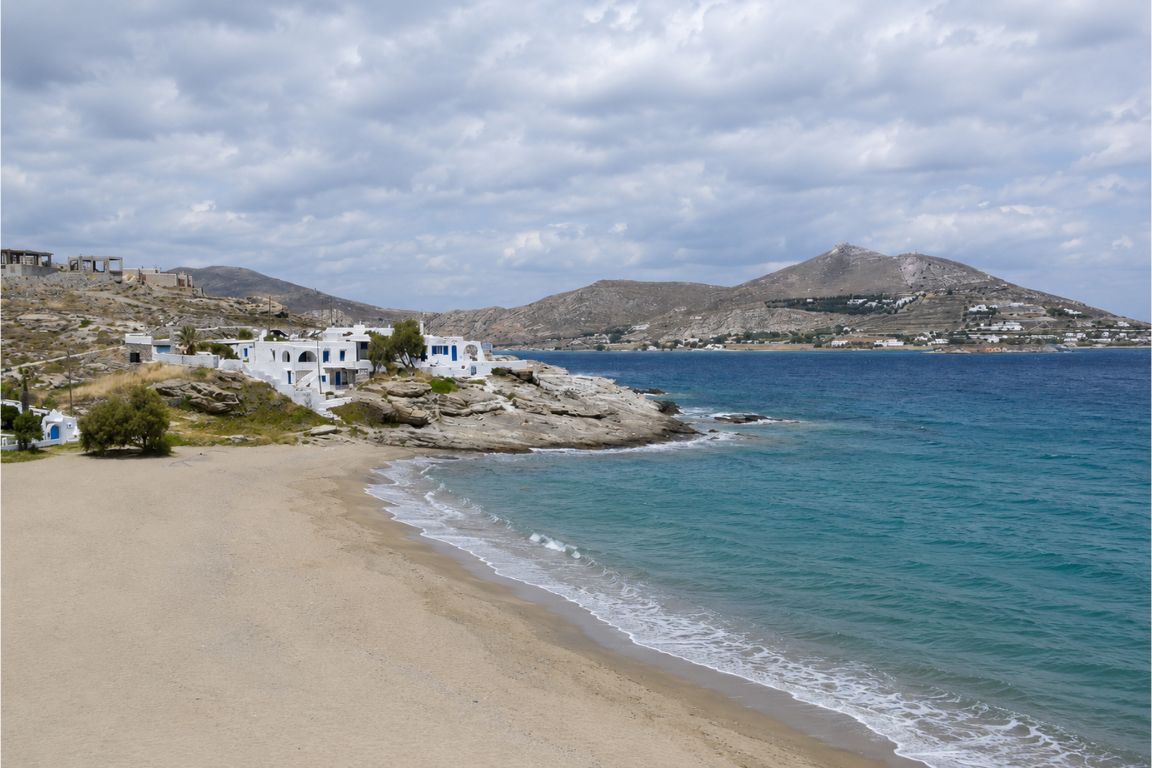 Mostly closed. November through March sees the majority of hotels, beach clubs, restaurants, and bars shut for the season. The island reverts to a small Cycladic community of around 10,000 permanent residents. Temperatures average 10-16°C, rain is more frequent than at any other time of year, and ferry connections to Athens reduce to one or two daily crossings. Direct Mykonos-Santorini ferry service typically suspends entirely from November to March.
There is a Mykonos in winter that has nothing to do with the Mykonos of summer. A handful of tavernas stay open year-round, serving the locals. The cats multiply visibly now that there are no tourists competing for their attention. Chora in January has a particular quiet that is genuinely appealing if that is what you came for. Accommodation prices drop 60-80% below peak summer, and the rooms that exist are comfortable.
But the honest assessment is that winter is not for first-time visitors. The island was built around a season, and outside that season the infrastructure reflects it. If you want quiet, affordable Greek island life in winter, smaller Cycladic islands like Syros or Naxos maintain more of their year-round character. Mykonos in winter is for people who already know what the island is and want to experience its other face.
Not sure where to start with Mykonos if you’ve never been to a Greek island before and don’t know what the experience actually looks like beyond the photos? Here’s our Mykonos tours for first-time visitors guide so you approach it with the right foundation.
How Do the Meltemi Winds Affect Your Trip?
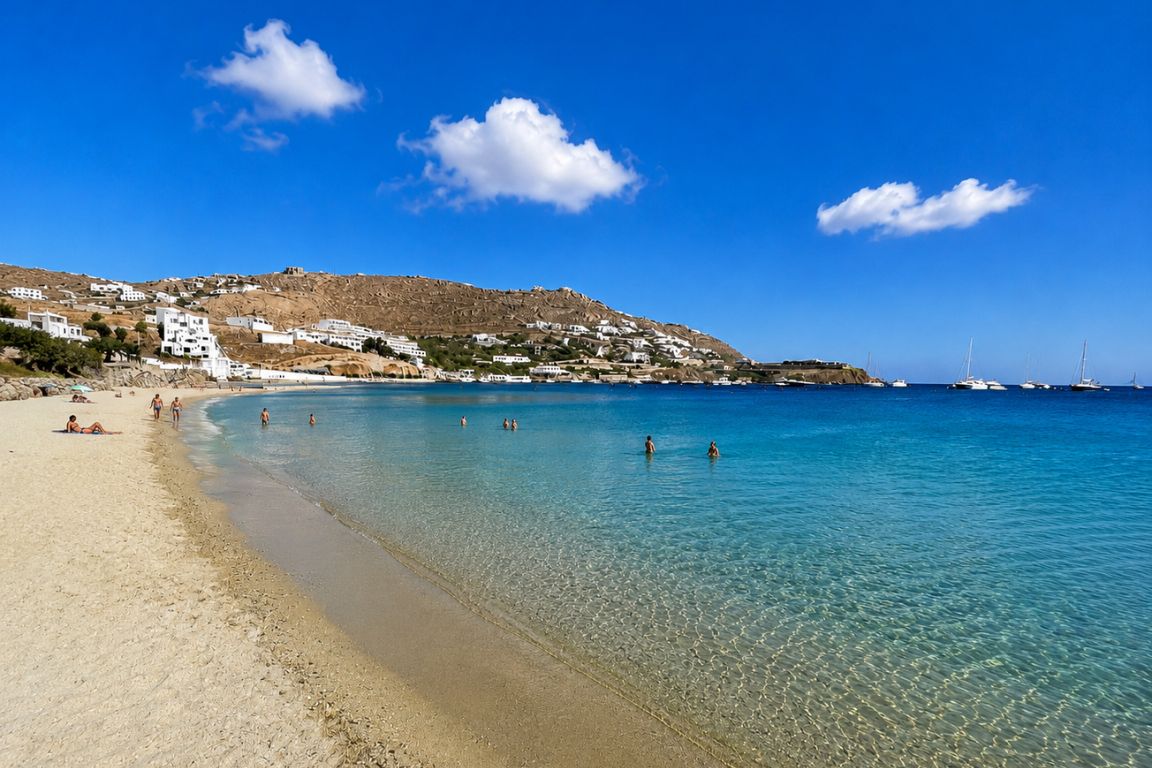 The meltemi winds blow from the north across the Aegean from roughly late June through early September, peaking in July and August. On Mykonos specifically, they hit northern and eastern beaches hardest and leave southern beaches relatively sheltered. For ferry travelers, strong meltemi days can cancel high-speed catamaran services. For beach days, knowing which direction your beach faces changes everything.
The meltemi is a dry, seasonal north wind driven by pressure patterns between the Balkans and the Middle East. It funnels through the Cycladic island channels, and Mykonos sits directly in its path. In a strong July blow, gusts reach 35-40 knots. The island has earned its name, “Island of the Winds,” honestly. At moderate strength, the meltemi is welcome: it keeps temperatures from becoming oppressive in August heat and creates the conditions that made Mykonos’s 16th-century windmills economically viable in the first place.
What it means practically for your trip:
Beach selection matters. Beaches facing north and northeast take the full force: Panormos, Ftelia, Agios Sostis. These are excellent on calm days and uncomfortable on meltemi days. South-facing beaches are sheltered by the island’s mass: Psarou, Ornos, Platis Gialos, Paraga, Paradise, Super Paradise. Plan your beach days according to the forecast.
Ferry planning matters. High-speed catamarans (SeaJets and similar) are the most vulnerable. Ferry operators typically suspend catamaran services at Beaufort 7-8 (around 50-60 km/h winds). Large conventional Blue Star Ferries are significantly more resilient and keep running in conditions that ground the smaller vessels. If your itinerary has a connecting ferry during peak meltemi months, book the conventional ferry over the catamaran, and build in an extra day’s buffer if the connection is time-sensitive.
On the beach itself. At Beaufort 6 and above, sand becomes airborne. Sunbeds on exposed beaches shift. Umbrellas become problems. This is not theoretical: people have left Paradise Beach in August mid-afternoon because the blowing sand made staying uncomfortable. On sheltered south-coast beaches, the same wind is refreshing.
We’ve put together a full beach breakdown in our best beaches in Mykonos tours guide so you know exactly which ones to prioritize, how to get there, and what to expect from the crowd and the facilities.
| April-May | None | All beaches calm | None |
| June | Low, occasional | All beaches mostly calm | Rare disruptions |
| July | High | South-facing: Psarou, Ornos, Paradise | Catamarans occasionally suspended |
| August | Very High | South-facing beaches only on bad days | Catamaran suspensions more common |
| September | Low, easing | Most beaches calm again | Rare disruptions |
| October-March | None (different winter winds) | Not beach season | General winter disruptions possible |
When Is Mykonos Cheapest to Visit?
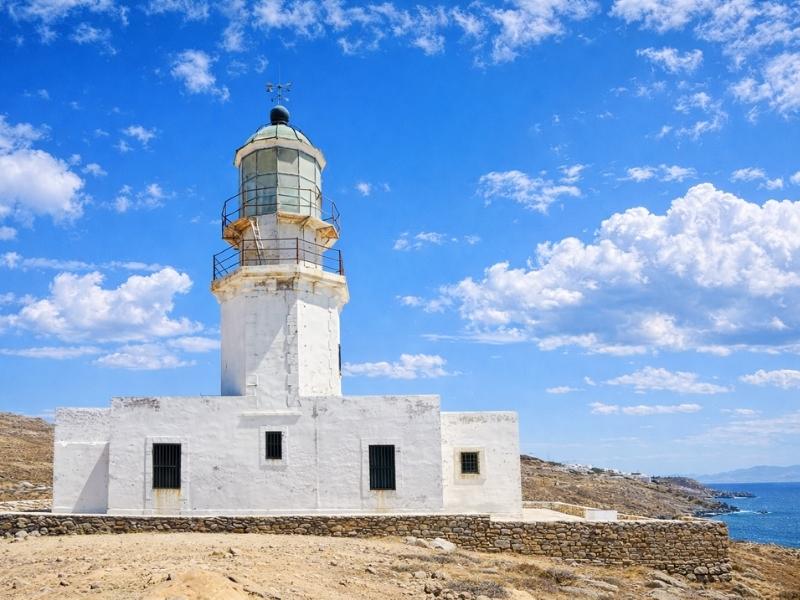
November through February are the cheapest months by a significant margin, with accommodation dropping 60-80% below peak. But most of the island is closed. The real value window for a genuine Mykonos experience is late May or early October, when prices run 40-60% below peak and the island is still functionally open. September offers a 20-40% discount over August while actually delivering better beach conditions.
The numbers are worth making concrete. A mid-range hotel room in Mykonos Town that costs €350-400 per night in July might be €120-150 in late May or early October, and €50-80 in January. The catch is obvious: the January price comes with a largely shuttered island. The late May or early October price comes with full access to almost everything that makes Mykonos worth visiting.
Food, transport, and drink prices vary less by season than accommodation does. A gyro from Sakis Grill House is the same price in May as in August. The bus from Fabrika to the beach is the same fare. Where shoulder season saves you money most meaningfully is on the accommodation bill, which is the largest single cost on most Mykonos trips.
One underappreciated saving: beach club sunbeds. The same row at a mid-tier beach club that costs €80-100 in August might be €40-50 in late May. Front-row sunbeds at premium venues scale even more sharply. If beach club days are a significant part of your itinerary, the shoulder season savings on sunbeds alone can add up to a meaningful amount across a four or five night trip.
Mykonos has a reputation for being expensive that isn’t entirely wrong but there’s more flexibility than most budget travel blogs give it credit for – our Mykonos tours on a budget guide breaks down where the savings actually are and where cutting corners costs you the experience.
What Does Mykonos Look Like Month by Month?
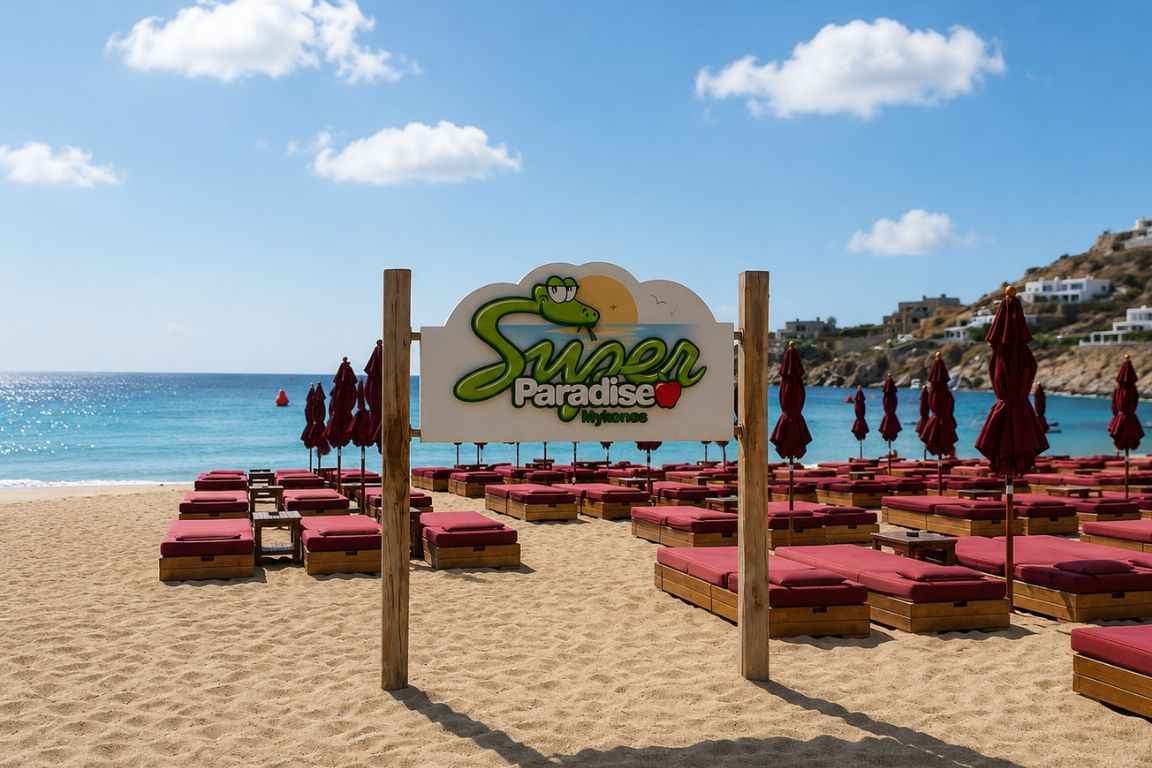 The island shifts character more dramatically across twelve months than almost anywhere else in the Cyclades. Below is a practical, honest breakdown of what each month actually delivers: weather, sea, crowds, what is open, what is not, and a clear verdict for different traveler types.
January
Mykonos in January is the island stripped of everything that makes it famous. Average highs sit around 13°C (55°F), rain falls on roughly eight to ten days across the month, and the skies alternate between mild winter sunshine and the kind of grey that settles in for days at a time. Most hotels, restaurants, beach clubs, and shops are closed. The businesses that do stay open are there for the permanent population of around 10,000 residents, not for visitors. Ferry connections to Athens reduce to one or two daily crossings; direct routes to Santorini, Paros, and Naxos do not run at all.
What January does offer is price and quiet in their most extreme form. Accommodation rates drop 60–80% below peak summer levels. The cats of Chora take back the alleys. Panagia Paraportiani, the windmills, Little Venice: all of them are there to be seen without a single other tourist in frame. If genuine solitude on a beautiful Mediterranean island appeals to you regardless of beach weather or nightlife, January is real. For first-time visitors expecting the Mykonos they see in photographs, it is the wrong month entirely.
February
February is statistically the coldest and rainiest month on the island. Temperatures average 13-15°C (55-59°F), sea temperatures hold around 15-16°C (too cold for comfortable swimming), and the days bring roughly seven to nine rain events. The meltemi is not a factor in February, but general winter wind is, and the island feels it. Most tourist infrastructure remains closed. The few tavernas and cafes that operate through winter are doing so for locals, and the atmosphere in those places is genuinely warm in the way that only comes when a place is not performing for anyone.
February has one specific draw for a narrow type of traveler: it is the cheapest month on the calendar to stay on Mykonos, the least crowded month by far, and, on the right day, genuinely beautiful in a stripped-back way that summer crowds never allow. Greek Carnival (Apokries) sometimes falls in February, and the small local festivities around it give the island a brief pulse of life. Outside that, February is for people who want to write, walk, think, or simply exist somewhere beautiful without spending much money or seeing many other people.
March
March is the turning point, though it turns slowly. Temperatures begin climbing toward 15-17°C (59-63°F) by month’s end, rain days drop from February’s peak, and the days get noticeably longer after the spring equinox on the 20th. The interior hillsides of Mykonos start to green up and wildflowers appear, which is one of the most underappreciated visual experiences the island offers, given that summer visitors only ever see the arid, sun-bleached landscape. A few more businesses open as the month progresses, and the island begins a slow exhale after winter.
March is not beach weather by any reasonable standard, and the party scene does not exist yet. But for travelers interested in the island’s architecture, history, and landscape rather than its summer identity, March is genuinely good. The Delos archaeological site reopens for the season. The windmills and Chora can be explored without company. Greek Independence Day on the 25th brings local celebrations to Mykonos Town that are worth witnessing if you happen to be there. Greek Orthodox Easter sometimes falls in late March, which marks the unofficial signal for the island to begin waking up properly, and the candlelit vigils and midnight celebrations are among the most atmospheric things Greece offers.
April
April is what locals call the soft opening. Temperatures reach 17-20°C (63-68°F) on average, occasionally touching the low 20s by month’s end. The sea is still cool at 16-17°C, which puts real beach days out of reach for most visitors, but the weather is pleasant for walking, exploring, and sitting outdoors with a coffee. More businesses open week by week through April, with roughly three quarters of restaurants and attractions running by the final week. Beach clubs are not yet operational. The nightlife scene exists in a quiet form, with bars in Chora open but not at summer volume.
When Greek Orthodox Easter falls in April (it varies year to year between late March and late April), it changes the character of the month meaningfully. The candlelit midnight Resurrection service on Holy Saturday is one of the most genuinely moving things Greece offers: the entire island gathers in the dark holding candles, the priest announces “Christos Anesti” (Christ is risen), and the light spreads person to person across the crowd. It is not a tourist performance. It is what the island does. Accommodation prices in April are 40-60% below peak summer, and the island is quiet enough that you feel it belongs to you in a way July never allows.
May
By mid-May, Mykonos is open. Not the cautious version of April’s soft opening, but genuinely operational: beach clubs beginning their seasons, restaurants running full menus, Delos boat trips back on daily schedules, and the first real beach days of the year. Temperatures reach 22-24°C (72-75°F), the sea warms to 19-21°C (comfortable for most swimmers, cool for others), and the island gets its first proper crowds of the year, though crowd is a relative word in May. The alleyways of Chora are walkable. Tables at good restaurants are available without booking weeks ahead. Sunbeds are accessible without the competitive ritual of peak season.
Late May in particular sits in a sweet spot that experienced Mykonos travelers know well. Accommodation runs 40-50% below August prices. The meltemi has not arrived. Every beach on the island is calm. The light in the late afternoon over Little Venice is the same light that will be there in August, with nobody fighting you for a view of it. May is the windiest month in terms of general Aegean breeze (distinct from the meltemi), which keeps temperatures comfortable and occasionally creates choppy conditions on exposed coasts. Southern beaches stay calm. It is, for a certain kind of traveler who values quality over peak season energy, close to the ideal month.
Delos is one of Greece’s most important archaeological sites and it’s a 20-minute boat ride from Mykonos – our Delos tour from Mykonos guide breaks down what’s actually there, how long you need, and whether a guided tour adds enough to justify the cost.
June
June is the month that runs out of downsides fastest when you try to list them. Temperatures settle at 25-27°C (77-81°F). The sea sits at 22-23°C, warm enough for long swims. Rain is essentially absent, averaging zero to one day across the entire month. June also has the most sunshine hours of any month on the island, with roughly 13 hours of daylight at its peak. Every beach club, restaurant, bar, and attraction is fully open and running its complete programme. The nightlife is properly alive. Cavo Paradiso kicks off its headline season. Scorpios and Nammos are fully operational. And the meltemi has not yet arrived in force, so every beach on the island is accessible and pleasant.
The crowds in early June are manageable. European school holidays have not started, which keeps the volume lower than July. By late June, things pick up: Mykonos Pride typically takes place in late June or early July, bringing a burst of celebratory energy to the island, and the feast of Agioi Apostoloi on June 30th is a local religious celebration worth catching in the villages. Accommodation in June runs 20-30% below peak August rates, which translates to meaningful savings over a four or five night trip. Locals who are asked which month they would choose tend to say June, and they are not wrong.
Trying to figure out whether to prioritize a full beach club day or save your energy for the Mykonos nightlife that doesn’t get started until midnight? Check out our Mykonos day party vs night party guide before you plan your schedule.
July
July is Mykonos at full volume. Temperatures push to 28-29°C (82-84°F). The sea reaches 23-24°C. Zero rain. The beach clubs are running their biggest programming. The nightlife is at its most intense. The Mykonos Art Festival runs through July and August, filling the island with exhibitions, gallery events, and cultural evenings alongside the party infrastructure. And the meltemi arrives properly, typically building through early July to full force by mid-month. Gusts reach 30-40 knots on stronger days, concentrating beach activity on the sheltered south coast: Psarou, Ornos, Platis Gialos, Paraga, Paradise, Super Paradise. Northern beaches like Panormos and Ftelia are beautiful on calm days in July and uncomfortable on the windy ones.
July requires advance planning in a way other months do not. Hotel rooms in good locations are booked out months ahead. Scorpios and Nammos reservations for specific areas need to be made weeks in advance. Taxis are scarce and expensive. On the Agia Paraskevi feast day on July 26th, the village celebrations in Ano Mera offer a genuine local counterpoint to the beach club world that most visitors never find. For travelers who came specifically for the full peak Mykonos experience and planned properly, July delivers exactly what it promises. For anyone who arrived underprepared, it can feel like an expensive, crowded version of something they could have experienced better in June.
August
August is the peak of the peak. Temperatures reach 29-30°C (84-86°F). The sea is at its warmest, around 24-25°C, and will hold that warmth into September. Rain is zero. The meltemi blows strongest and most consistently of the year. Every inch of the island’s infrastructure is running at capacity: beach clubs booked weeks out, Chora’s alleys near-impassable in the afternoon, taxis requiring strategic planning to secure. Accommodation prices are at their annual maximum. August 15th brings one of the island’s most significant religious celebrations, the feast of the Assumption of the Virgin Mary at the monastery church of Panagia Tourliani in Ano Mera, a centuries-old gathering that draws the local Greek community as much as it draws tourists.
The XLSIOR Festival in the last week of August is one of Europe’s largest LGBTQ+ events, drawing tens of thousands of visitors from across the world. Super Paradise Beach, Jackie O’, and several venues in Chora become the center of it for several days running. For the right traveler, XLSIOR week is exactly why they came. For anyone who did not know it was happening and arrived expecting a calmer late-August island, it is a significant surprise. Check the dates before booking late August travel. Beyond XLSIOR, August is the month where the gap between advance-planning travelers and underprepared ones is widest. The experience those two groups have on the same island in the same week can be almost incomparably different.
September
September is the month that surprises people most. The Aegean holds its summer warmth stubbornly after two months of July and August heat, and sea temperatures peak at 24-25°C, actually warmer than July. The meltemi eases through the month. Crowds thin as European holidays end and the summer crowd disperses. Accommodation prices drop 20-40% from August. And yet every beach club and restaurant is still fully open in early September, the nightlife is still running, and the weather is reliably warm and dry. On the second Sunday of September, the Harvest Feast at the Agricultural Museum is a genuinely local event: wine, food, traditional dancing to bagpipes and drums, the island celebrating itself rather than performing for visitors.
By late September the shift is more noticeable. A few venues start their closing season programming: the closing parties at major beach clubs are their own events, often with headline acts and a genuine sense of occasion, the island saying goodbye to the summer rather than just shutting down. The sea is still excellent for swimming. Evenings cool just enough to make dinner outside comfortable in a new way. For the traveler who wants the complete Mykonos experience at its most balanced, September, specifically the first three weeks, is the strongest argument on the calendar.
October
October splits cleanly into two halves and the distinction matters. The first three weeks offer something genuinely special: sea temperatures still around 22-23°C from summer’s accumulated warmth, air temperatures around 20-22°C (68-72°F), thin crowds, and accommodation prices 40-50% below peak. Many beach clubs have closed, but restaurants, bars, and most of Chora’s retail remain open into mid-October. The island is unhurried in a way that even June does not quite match. Walking the north of the island, visiting Delos (boats still running), or spending a morning at Panagia Paraportiani without another visitor in sight: these things are possible in early October and essentially impossible in July.
The second half of October is different. Restaurants begin closing. Weather becomes less predictable, with more wind and occasional rain. The island starts to feel like it is returning to its winter self. Average temperatures drop toward 18-20°C (64-68°F) and evenings can be cool enough to need a jacket. The Folk Association of the Women of Mykonos hosts traditional celebrations and music events in October, one of the few cultural calendar entries specific to this quieter end of the season. For travelers who prioritize cultural exploration over beach days, late October is still viable. For anyone expecting beach weather and open infrastructure, the first two weeks of October is the safer target.
We’ve put together a full safety breakdown in our is Mykonos safe guide so you know exactly what to be aware of, which situations to avoid, and how to have a great time without putting yourself in an unnecessary position.
November
November is the threshold. Most hotels have closed. Most restaurants have closed. The beach clubs are done for the year. Temperatures average 17°C (63°F) with cooler nights, sea temperatures drop to 19-20°C, and rain returns with five to six days of precipitation across the month. Ferry schedules thin out considerably. Direct connections to Santorini and other popular Cycladic islands have typically suspended until April. What remains is a small, functioning winter community, a handful of local tavernas, and the island’s permanent architecture in its most unadorned state.
Early November occasionally throws a warm spell that makes the beaches accessible and the walking extraordinary, but this cannot be counted on. The traveler who arrives in November for a Mykonos holiday and finds four grey windy days with half the island shuttered will feel differently about it than the traveler who came specifically for off-season quiet. If the latter sounds appealing, November offers it at very low cost. The island is not hostile in November. It is simply not oriented toward visitors in the way it is from May through October, and the experience reflects that honestly.
Trying to decide between Mykonos’s beach club scene and Santorini’s caldera views and sunset obsession? Check out our Mykonos vs Santorini guide before you commit to either.
December
December is the quietest month on the tourism calendar and arguably the most atmospheric for a specific type of visitor. Average highs reach 14°C (57°F), the sea cools to 17-18°C, and rain falls on seven to eight days across the month. Christmas in Mykonos has a modest but genuine local character: the churches of Chora are lit, the narrow streets of the old town take on a winter intimacy, and the handful of year-round tavernas feel like what restaurants are supposed to feel like when they are feeding people rather than managing volume. Accommodation is at its cheapest of the year.
December is not a holiday destination in the conventional sense. The beach, the beach clubs, the nightlife, the social energy: none of it exists. But for travelers who want to experience a beautiful Cycladic town in winter, who want to walk Matogianni Street with no one else on it and have dinner at a table that is not being turned in forty-five minutes, December delivers something real. The island at the end of the year is quieter than it has been for months, the locals are themselves again, and the quality of an unhurried kafeneion coffee in the pale winter sun is its own reward for anyone who values that kind of thing.
| January | 13°C / 55°F | 16°C | 8-10 | Very low | A few local tavernas, some hotels | For solitude seekers only |
| February | 13°C / 55°F | 15-16°C | 7-9 | Very low | Minimal | Coldest month. Skip unless you love quiet |
| March | 15°C / 59°F | 15-16°C | 6-8 | Very low | Island starting to wake up | Shoulder opening, not yet ready |
| April | 19°C / 66°F | 16-17°C | 4-5 | Low | Most things opening, sea cool | Good for Chora walks, not beach days |
| May | 23°C / 73°F | 19-21°C | 2-3 | Low | Fully open, beach clubs starting | Excellent: value, calm, warm enough |
| June | 27°C / 81°F | 22-23°C | 0-1 | Moderate | Everything open and running | Best overall month |
| July | 28–29°C / 84°F | 23-24°C | 0 | Very high | Everything at full capacity | Peak energy, meltemi arrives, expensive |
| August | 29–30°C / 86°F | 24-25°C | 0 | Maximum | Full capacity, XLSIOR festival late Aug | Highest energy, highest cost, strongest meltemi |
| September | 25–26°C / 79°F | 24-25°C | 1-2 | Moderate, dropping | All venues still open | Best value: warm sea, easing crowds |
| October | 21°C / 70°F | 22-23°C | 3-4 | Low | Most things open until mid-month, then closing | Early Oct excellent; late Oct patchy |
| November | 17°C / 63°F | 19-20°C | 5-6 | Very low | Most things closed | Off-season, cheap, mostly shut |
| December | 14°C / 57°F | 17-18°C | 7-8 | Very low | Minimal, some local life | Cheapest month, not a travel destination |
A few things worth noting beyond the table. March and the first half of April feel more like early spring than beach weather: cool mornings, intermittent rain, and a gradual reopening of the island. Greek Orthodox Easter, which typically falls in April, marks the traditional signal for businesses to open and the season to begin. If Easter falls early in April, things open sooner. If it falls late, the island is slower to start.
October deserves a closer look because it splits in two. The first three weeks of October can genuinely surprise visitors. Sea temperatures hold summer warmth from the months just past. Beaches are accessible and quiet. Mykonos Town is walkable and unhurried. Then the last week arrives with more wind, cooler air, and an increasing number of shuttered restaurants. Early October bookings: yes. Late October bookings: manage expectations.
There’s more to Mykonos than most visitors ever discover beyond the beach clubs and the Little Venice sunset crowd – our what to do in Mykonos tours guide breaks down the experiences worth seeking out and the ones worth skipping.
What Should You Book in Advance for Each Season?
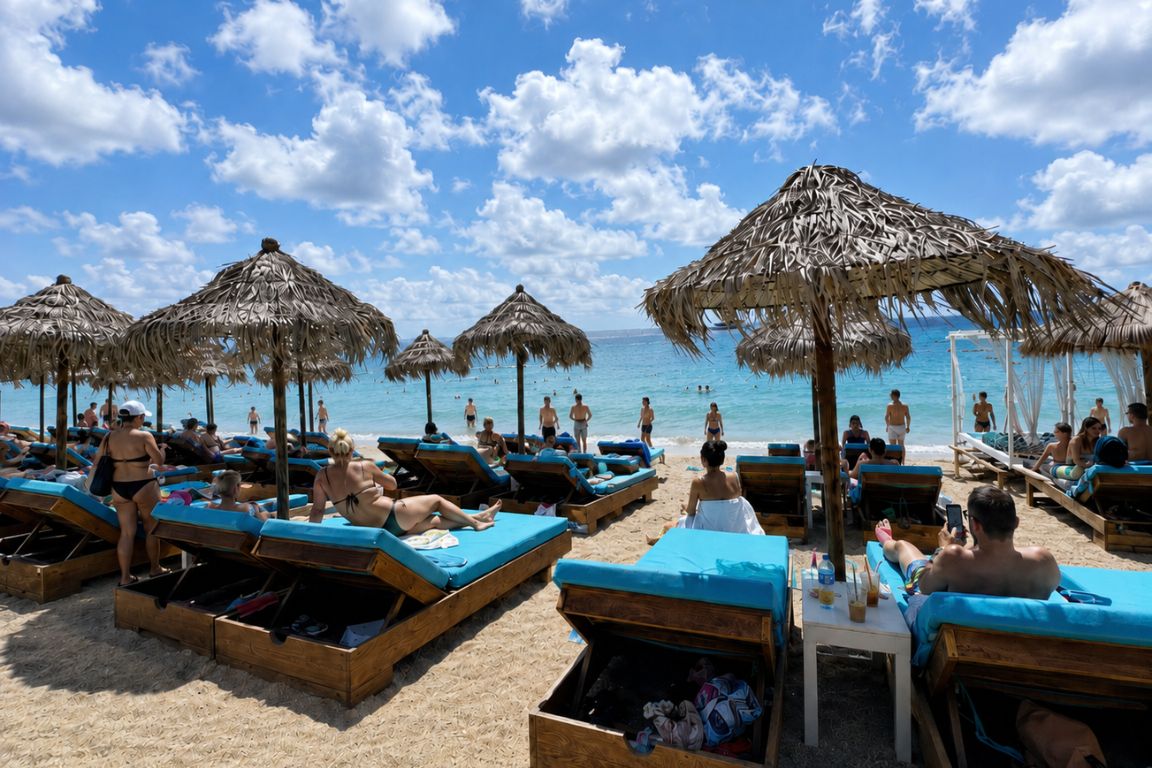 For peak season (July and August): book accommodation 3-4 months ahead, top beach clubs 4-6 weeks ahead, and Delos boat tickets a few days ahead. For shoulder season (late May, June, September): accommodation 4-6 weeks ahead is usually sufficient, though popular boutique hotels fill faster. For early October: 2-3 weeks is often fine, but anything specific should still be confirmed in advance.
The accommodation booking window is the most consequential. Mykonos has a constrained supply of quality rooms in good locations, and demand in peak season is genuinely aggressive. Properties in Chora and on the south coast fill months ahead for July and especially for August. The travelers who book in February or March get the properties they want. The ones who book in June for August find themselves choosing from what is left.
Beach clubs are a separate booking track. Scorpios and Nammos in peak season operate more like restaurant reservations than walk-in venues for anyone who wants specific areas: the Private Beach at Scorpios (cabanas from €160), front-row sunbeds at Nammos, specific sunset-view tables. Their WhatsApp booking channels tend to be more responsive than official websites. Treat a Scorpios Sunset Ritual reservation in August the way you would a reservation at a Michelin-starred restaurant: the earlier the better.
The Delos day trip is more flexible. Boats leave from the old port most mornings during the season, and tickets are usually available on short notice. The exception is school holiday periods in July and August when morning boats can sell out. Book a day ahead during those windows to be safe.
Ferry connections between Mykonos and Santorini run from early April to late October. Outside that window, the connection requires routing through Athens. For island-hopping itineraries that rely on direct Mykonos-Santorini crossings, plan accordingly if your dates approach the edges of that window.
Wondering which Mykonos boat tours include stops at Delos, the sea caves, or the best snorkeling spots and whether private charters are worth the premium over a group experience? This best Mykonos boat tours guide covers what most Greece travel blogs treat as obvious.
| Best overall balance | June, late May | Full infrastructure, no meltemi, 20-30% below peak prices |
| Best value with full experience | September | Warmest sea, thinning crowds, 20-40% cheaper than August |
| Best for nightlife and energy | August | Peak everything including XLSIOR Festival |
| Best for culture and quiet | May, early October | Delos accessible, Chora walkable, crowds minimal |
| Best for budget travel | Late May, early October | 40-60% below peak, island still functionally open |
| Best for beach days without wind | June, September | Meltemi absent or easing, all coasts calm |
| Avoid (first-time visitors) | November-March | Most of the island closed, not the Mykonos you came for |
Frequently Asked Questions
What is the best month to visit Mykonos?
June is the best single month for most travelers: full infrastructure, warm weather, swimmable sea, and meltemi winds not yet at full strength. Late May and September are the best value alternatives, offering nearly identical experiences at 20-40% lower accommodation costs and fewer crowds.
Is Mykonos good in October?
Early October, yes. Sea temperatures remain warm from the summer, crowds are thin, prices drop noticeably, and Mykonos Town is genuinely pleasant to walk without the peak season pressure. The second half of October is patchier as businesses begin to close and weather becomes less predictable. Plan for the first two to three weeks if October is your target.
What is Mykonos like in May?
By mid-May the island is fully open. The weather is warm, sea temperatures are around 19-21°C (cool but swimmable for most), crowds are low, and accommodation prices are 40-50% below peak. The nightlife is quieter than summer but beach clubs are opening and bars in Chora are operating. May is one of the best months for travelers who want value without sacrificing the core experience.
Is Mykonos hot in September?
Yes. September averages 24-26°C during the day, with sea temperatures at their annual peak of 24-25°C. It is beach weather by any standard. The meltemi winds have largely eased, which makes September particularly good for beach days at any coast of the island, not just the sheltered south.
When should I avoid Mykonos?
Avoid mid-August if you dislike crowds and have not booked everything well in advance. Avoid November through March if you want the Mykonos experience (beach clubs, nightlife, restaurants) rather than a quiet off-season visit. Late October can work but requires lower expectations on what is available and open.
How far in advance should I book Mykonos in summer?
For July and August: book accommodation 3-4 months ahead, ideally by March or April. Top beach clubs like Scorpios and Nammos should be booked 4-6 weeks in advance for specific reservation types. Ferries to and from Mykonos should be booked as soon as your dates are confirmed in summer months, as popular crossings sell out.
Greek tour guide since 2012 · Founder, Mykonos Tours
Alexandros has guided over 13,500 travelers through Mykonos and the Cyclades since founding the agency.
Your next step · optional experience
Match your month and activity
General recommendation — choose an option below to refine it.
Rhenia sailing and Delos visit
Check your date before arranging the rest of your day. Swim at Rhenia, eat lunch aboard and explore Delos in one 5–6-hour outing.
Choose the live English guide option for guided Delos. Admission and optional pickup cost extra. Confirm meeting point the day before; swimming uses a ladder.
Choose a date to view the published departure schedule. Final availability and price are confirmed on Viator.
Compare options, fit your day or calculate the cost
Swim at Rhenia, eat lunch aboard and explore Delos in one 5–6-hour outing. Choose the live English guide option for guided Delos. Admission and optional pickup cost extra. Confirm meeting point the day before; swimming uses a ladder.
Pair the island drive with a guided walk through Mykonos Town. 3½ hours • English guide • Meet at New Port; hotel pickup excluded. Uneven walking and moderate fitness required.
Combine a live DJ, open bar and a swimming stop in one afternoon on the water. 4 hours • 18+ • Old Port departure; transfers excluded. Bring a towel; confirm swimming and health suitability with the operator.
Taste Greek coffee, pastries, spreads and souvlaki with a local guide. 2 hours • English • Meet at the Old Port Eurobank ATM. No included pickup; walking and steps. Confirm dietary needs before paying.
We may earn a commission from bookings through these links. Your final price and booking conditions are shown by the provider.