How to Plan a Trip to Mykonos
Plan your Mykonos trip: best time to visit, realistic daily budgets, safety tips, and how to avoid the costly mistakes most first-time visitors make.
Pair the island drive with a guided walk through Mykonos Town. Discover Mykonos highlights tour ↗
The best time to visit is late May or September – warm enough for beaches, light enough on crowds. Budget at least €200-300 per person per day for a mid-range experience, more if you plan on beach clubs. Book your accommodation and any top-tier venues (Scorpios, Nammos) well in advance for peak season. Mykonos is very safe for tourists; the main risks are petty theft in crowded areas and overpriced “pirate taxis.” The single biggest mistake first-timers make is underestimating how quickly costs compound.
| Peak season | June-August |
| Best shoulder months | Late May, September-October |
| Recommended stay | 4-5 nights (minimum 3) |
| Daily budget (mid-range) | €200-300 per person |
| Daily budget (luxury) | €500-1,000+ |
| Climate Resilience Tax (5-star, peak) | €10 per room/night |
| Cruise port tax (peak) | €20 per passenger |
| Ferry from Athens (Piraeus/Rafina) | 2.5-5.5 hrs depending on vessel type |
| Flight from Athens | ~40 minutes |
| U.S. State Dept. safety rating | Level 1: Exercise Normal Precautions |
| Airport code | JMK (Mykonos International Airport) |
| Currency | Euro (€) |
Booking choice: 3½ hours • English guide • Meet at New Port; hotel pickup excluded. Uneven walking and moderate fitness required. Check dates for Mykonos highlights tour ↗
When Is the Best Time to Visit Mykonos?
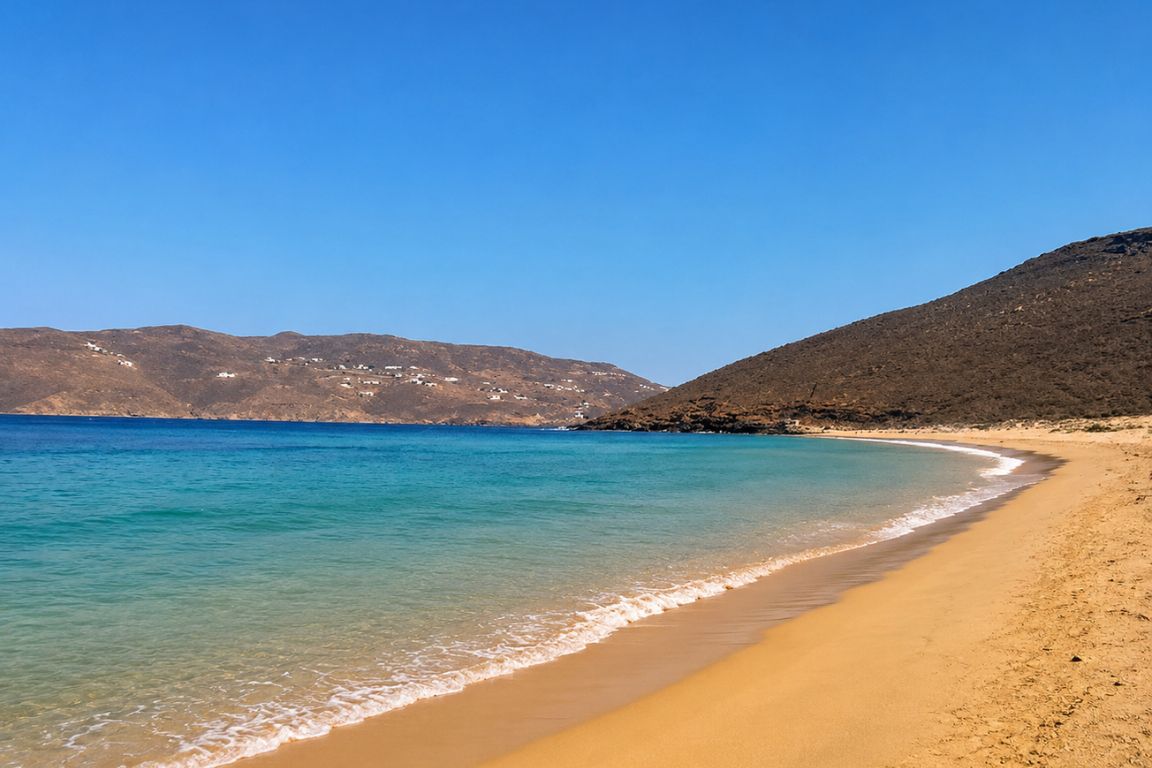 For most travelers, late May or September is the sweet spot. The weather is warm, the sea is swimmable, beach clubs and restaurants are fully open, and you won’t be fighting August crowds for a sunbed or a taxi. If you want the full high-energy Mykonos experience regardless of cost and crowds, June through August delivers it. Just know what you’re signing up for.
June is the month locals often call the “best-kept secret” of the Mykonos calendar. The island is alive, every venue is open, nightlife is in full swing, and the meltemi winds haven’t yet arrived in force. Water temperatures hover around 22-23°C (72-73°F), warm enough for hours in the sea. Then July hits. The meltemi starts. Gusts from the north reach 30-40 knots on rough days, which is part of what gives Mykonos its nickname, “Island of the Winds.” It doesn’t ruin a trip, but it changes it. Northern beaches like Panormos and Ftelia take the brunt; southern beaches like Psarou and Platis Gialos stay calmer because of the island’s geography. August is the peak of everything: crowds, prices, wind, heat, and chaos. It’s the month people either love completely or swear never to repeat.
September shifts the balance. The sea reaches its warmest temperatures of the year, around 24-25°C (75-77°F), the winds calm down, and the summer crowds start thinning. You can walk Mykonos Town at noon without being shoulder-to-shoulder. Prices on accommodation often drop 20-40% compared to August. The main beach clubs and restaurants stay open through October, then begin closing for the season.
Want to know which season delivers the most out of a Mykonos visit without paying July prices for everything? Here’s our best time to visit Mykonos tours guide so you don’t book the wrong time of year.
| April–May | 16-21°C | Low | None | Culture, quiet exploration, value |
| June | 25-27°C | Moderate | Low | Best overall balance |
| July | 27-29°C | Very High | High | Full party experience |
| August | 28-30°C | Peak | Very High | Peak energy, highest prices |
| September | 24-26°C | Moderate | Low | Best beach conditions, value |
| October | 18-22°C | Low | None | Off-season calm, some closures |
Winter is not for first-timers. From November through March, a large portion of the island simply closes. Hotels, restaurants, and beach clubs shutter. The Mykonos that people come for doesn’t exist in January. A handful of locals and digital nomads have the place to themselves, which has its own appeal, but it’s a fundamentally different destination.
First time planning a Mykonos beach holiday and not sure which part of the season delivers the best overall experience for the money? Here’s our beach season Mykonos tours guide so you don’t arrive at the wrong time and spend the whole trip fighting for a sunbed.
How Long Should You Stay in Mykonos?
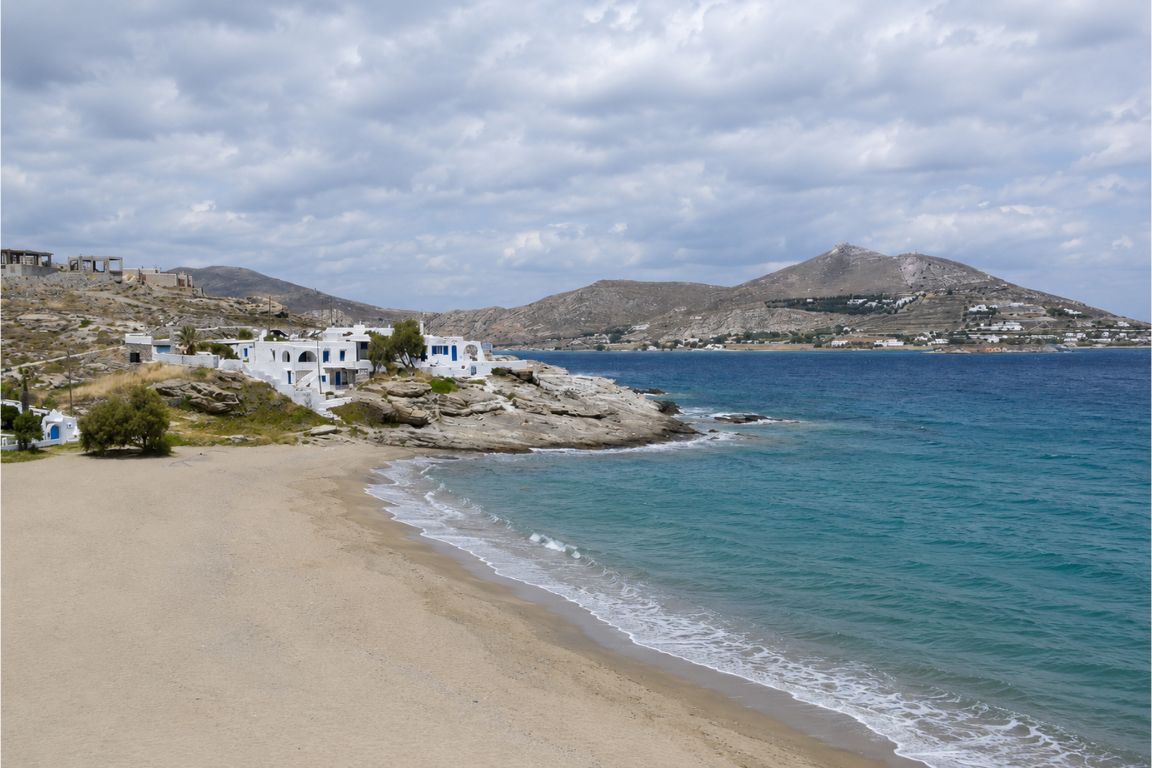 Four nights is the right minimum for a first visit. Three nights feels rushed once you factor in travel days. Five nights gives you time to move at your own pace, explore more than the obvious beaches, and actually settle into the island’s rhythm rather than sprinting through a checklist.
The calculation goes like this: day one is orientation. You arrive, find your bearings in Mykonos Town, have dinner somewhere good. Day two you start to get into it properly. Day three is when you stop feeling like a tourist and start feeling like someone who actually knows the island. Day four you’re not ready to leave.
Three nights is enough only if your goal is one or two beach clubs and Little Venice at sunset. If you want Delos (the ancient archaeological island one short boat ride away), a proper beach day, Mykonos Town in the evening, and time for a meal that isn’t rushed, four to five nights is the right call. Island-hoppers often shortchange Mykonos for the sake of fitting in Santorini or Naxos. It usually results in mild regret.
Not sure how much time to set aside for Mykonos without either rushing the highlights or running out of things to do? Here’s our how many days do you need in Mykonos guide so you plan the right length stay.
Where Should You Stay in Mykonos?
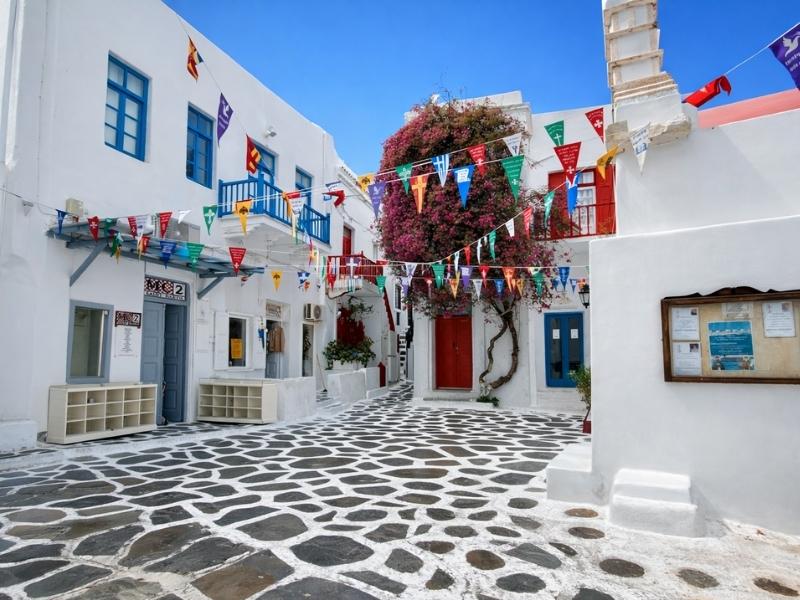
Mykonos Town (Chora) is the best base for most visitors: central, walkable at night, and within easy reach of the island’s best beaches by bus or water taxi. Ornos Beach is the best alternative for families or anyone who wants calmer water and a quieter atmosphere with quick access to the south coast.
Staying in Chora means you can walk to dinner, stumble home from a bar, and reach the Fabrika bus station on foot. The trade-off is price – centrally located hotels command a significant premium, especially in July and August. Rooms in peak season at a mid-range property in Chora can easily reach €300-500 per night. Budget-friendly accommodation exists further from the center, but then you need a scooter, ATV, or car to get anywhere easily, which adds its own cost and complication.
Ornos Beach sits on the southwestern coast, about 3km from Chora. It’s calmer, better for families, and serves as the departure point for the Mykonos Water Taxi, which connects to beaches along the south coast including Psarou, Platis Gialos, Paraga, Paradise, and Super Paradise. Staying at Ornos and using the water taxi for beach-hopping is genuinely one of the smarter logistics moves on the island.
Want to find the beaches that deliver on the Mykonos promise without the wall-to-wall sunbeds and DJ sets that dominate the most famous ones? Here’s our best beaches in Mykonos tours guide so you pick the right spots.
How Do You Get to Mykonos?
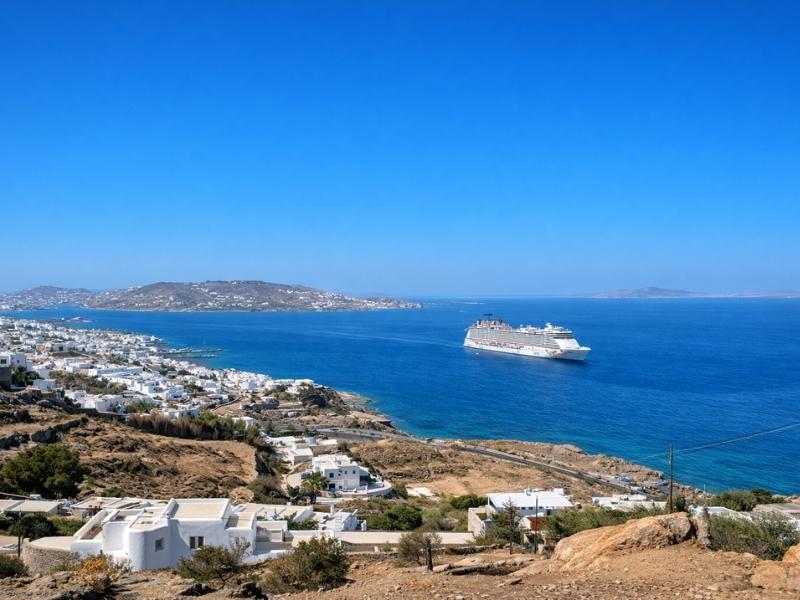
From Athens, you have two options: fly (40 minutes) or take a ferry from Piraeus or Rafina (2.5-5.5 hours depending on vessel). If you’re arriving at Athens Airport and connecting to Mykonos the same day, fly or take the Rafina ferry, which is just 30 minutes from the airport. If you’re already based in central Athens, the Piraeus ferry is the more scenic and cost-effective choice.
The Rafina connection is the one most first-timers miss. Athens Airport sits on the eastern edge of the city, and Rafina Port is a 30-minute taxi ride away (roughly €35-40). A taxi to Piraeus from the airport runs €60-70 through heavy city traffic. If you’re landing in Athens and catching the same-day connection, Rafina almost always makes more sense. Multiple ferry operators run the Rafina-Mykonos route, and booking on Ferryhopper in advance locks in your seat in peak season.
Conventional (slow) ferries from Piraeus take around 5 hours but are comfortable, spacious, and significantly cheaper for luggage hauling than flying. High-speed catamarans cut the crossing to about 2.5-3 hours but are rougher in choppy seas. In July and August, when the meltemi is blowing, seasickness-prone travelers should opt for the large conventional Blue Star Ferries rather than the smaller catamarans. The movement on a small high-speed vessel in 30-knot winds is not subtle.
Direct international flights to Mykonos International Airport (JMK) operate from most major European hubs seasonally, so many travelers skip Athens entirely. Check Aegean Airlines, Ryanair, easyJet, and seasonal charters from your home country.
What Should You Budget for a Trip to Mykonos?
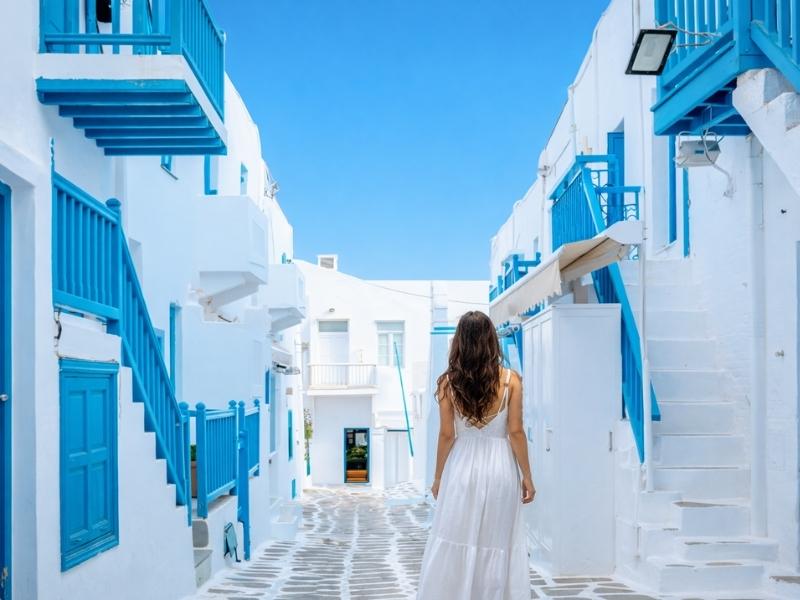
Mykonos is genuinely expensive. A realistic mid-range daily budget, including accommodation, food, transport, and one beach club visit, sits between €200-300 per person. Luxury travelers planning Nammos lunches and 5-star hotels should budget €500-1,000+ per person per day. The island rewards knowing where the costs concentrate, and where you can ease off without sacrificing the experience.
The costs that surprise people most are not the obvious ones. The beach clubs are expected to be expensive. What catches first-timers off guard is everything adjacent: taxis that run €30-40 per trip as a minimum, sunbeds at mid-tier beaches starting at €35-50 per pair, cocktails in Little Venice at €18-22 each, and the Climate Resilience Tax (officially the Climate Crisis Resilience Fee), which adds €1-10 per room per night depending on your accommodation category. At a 5-star hotel during peak season, that’s €10 on top of your already substantial room rate, every night.
| Accommodation | €40-60 | €120-200 | €350-800+ |
| Food & drink | €20-35 | €50-80 | €150-300+ |
| Transport | €5-10 (bus) | €25-50 | €60-150+ |
| Beach & activities | €0-20 | €40-80 | €100-500+ |
| Total daily estimate | €65-125 | €235-410 | €660-1,750+ |
Where you can be smart: use the public bus network for beach transfers rather than taxis. The KTEL buses run regularly from Fabrika station in Chora to most major beaches for €2-3 per ride. Eat gyros from Sakis Grill House for around €7 instead of every meal being a restaurant. Save the beach club spend for one properly planned day rather than trying to do it every day. One great day at Scorpios or Nammos is worth more than three expensive average days.
One practical note: Greece does not allow toilet paper in toilets. It goes in the bin provided. This is not optional, and the pipes are genuinely too old to handle it. Knowing this in advance avoids an embarrassing moment on day one.
We’ve put together a full budget breakdown in our Mykonos tours on a budget guide so you know exactly where to spend, where to save, and how to build a genuinely enjoyable Mykonos trip without draining your account.
What Should You Actually Do in Mykonos?
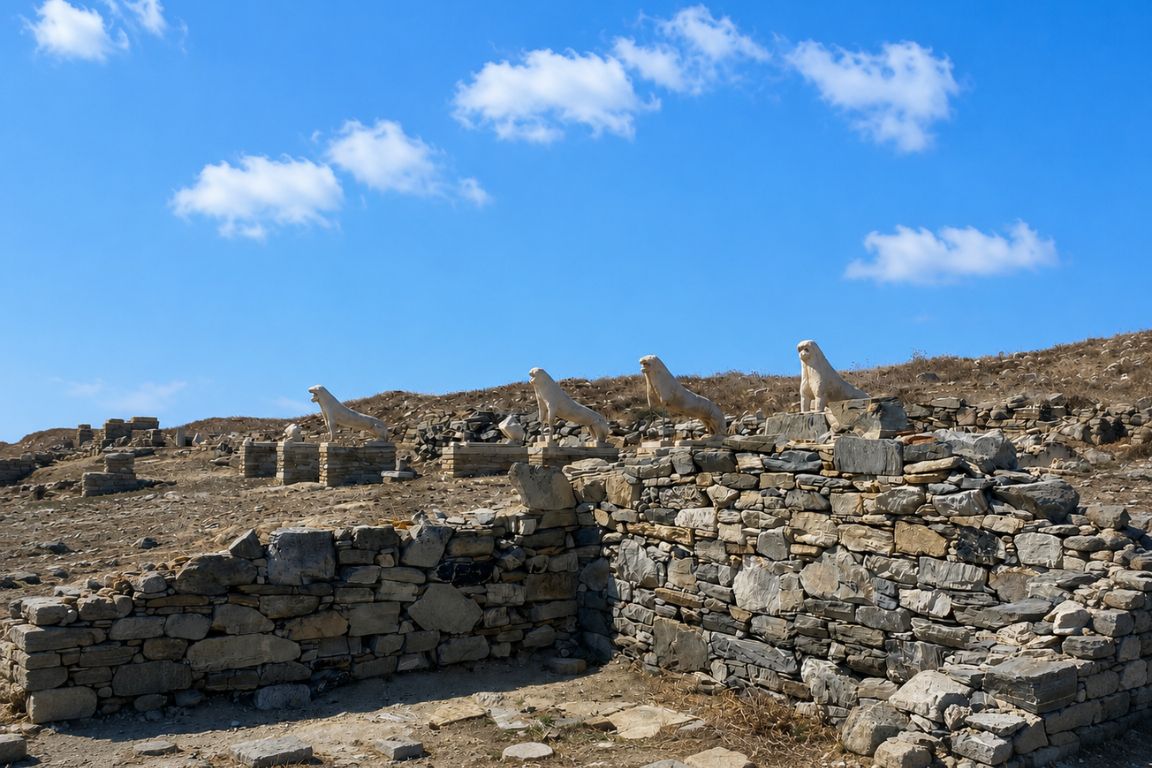 The Delos day trip is non-negotiable for anyone with even passing curiosity about ancient Greece. Beyond that, the best experiences divide cleanly: Mykonos Town for evenings, the south coast beaches for daytime, and at least one proper boat tour to see the coastline the way it’s meant to be seen.
Mykonos Town rewards wandering. The labyrinthine alleyways around Matogianni Street were designed to confuse pirates – a genuine piece of defensive architecture that now just confuses tourists pleasantly instead. The windmills above Chora catch the last of the afternoon light in a way that still stops people regardless of how many times they’ve seen the postcard version. Little Venice, the row of buildings that hang directly over the water at the edge of town, is best at sunset with a drink in hand. Get there before 7pm in August if you want a waterfront seat.
The Delos archaeological site sits a 25-minute boat ride from the Old Port. It’s one of the best-preserved ancient sites in the Cyclades and often skipped by beach-focused visitors, which is their loss. The site is significant enough to be both a UNESCO World Heritage Site and a sacred location in ancient Greek mythology – the birthplace of Apollo and Artemis. Morning boats leave around 9-10am; check the old port for the day’s schedule.
For beach days, the south coast is the main event. Psarou and Ornos for calmer water and a more relaxed atmosphere. Paradise and Super Paradise for the full party experience. Elia for something longer, quieter, and more mixed. The water taxi from Ornos connects them all for €20 all-day access.
There’s more to Mykonos than most visitors ever discover beyond the beach clubs and the Little Venice sunset crowd – our what to do in Mykonos tours guide breaks down the experiences worth seeking out and the ones worth skipping.
What Are the Best Beach Clubs in Mykonos?
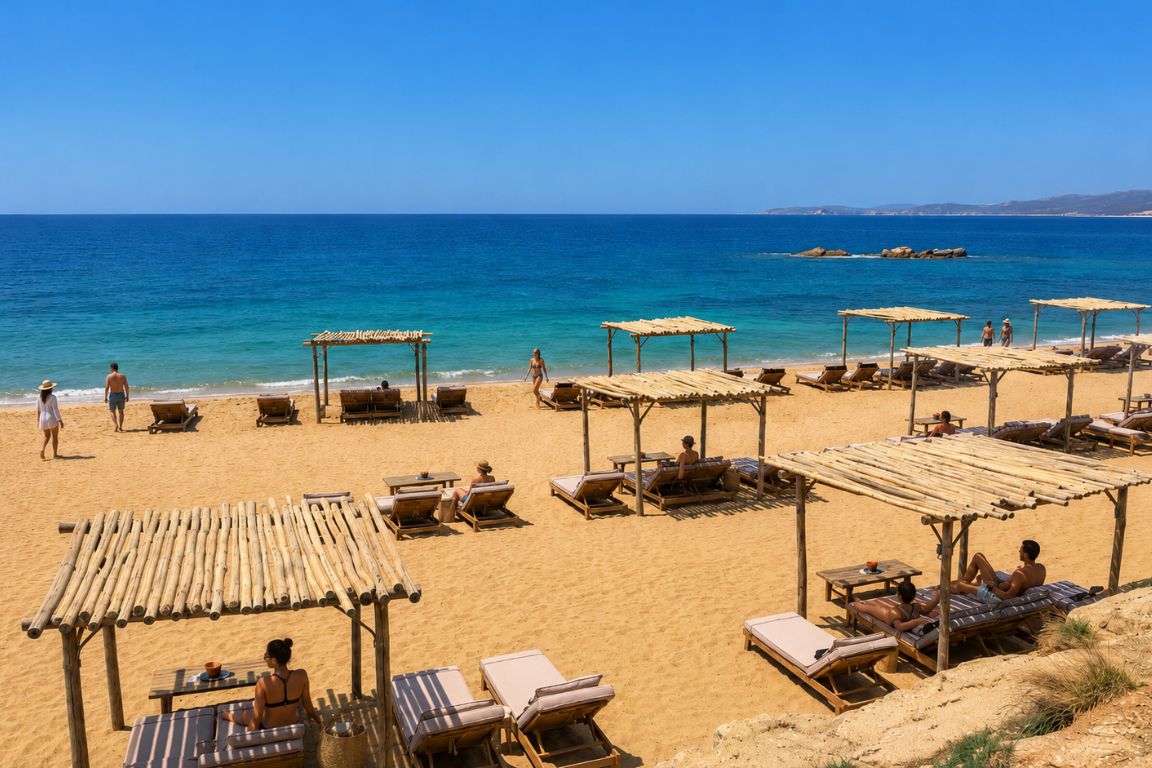 Scorpios at Paraga Beach is the most distinctive beach club on the island: bohemian, spiritual in atmosphere, famous for its Sunset Rituals with live musicians and DJs, and a magnet for travelers in their late 20s to 40s who want something more intentional than a pure party. Nammos at Psarou Beach is the apex of luxury and celebrity-spotting. Paradise and Super Paradise deliver the high-volume party experience. Each serves a genuinely different purpose.
The mistake most visitors make with beach clubs is trying to experience several of them in a day. These places are designed to hold you. You arrive at noon, the music builds through the afternoon, the sunset ritual hits at 6:30pm, and suddenly it’s 10pm and you have no idea where the day went. That’s the experience. Pick one per day and commit to it rather than rushing between venues.
Scorpios became part of Soho House in recent years, which streamlined membership bookings but didn’t change the vibe. The private beach area (cabanas from €160) gives unobstructed sea views. Their Thursday DJ sets are particularly strong. Reservations for peak season need to be made weeks in advance; WhatsApp booking often works better than the official website.
Nammos at Psarou has a yacht dock and a helipad. The adjacent Nammos Village features high fashion retail. Sunbeds in the front row can reach €500 with minimum spend requirements. This is unapologetically a venue for people who want the most expensive version of everything, done extremely well. Celebrity sightings are common enough that staff are trained to be casual about it.
For the all-day party atmosphere with a more approachable price point, Tropicana at Paradise Beach starts its daily parties at 4:30pm. Jackie O’ at Super Paradise draws a vibrant, inclusive crowd and runs daily drag shows alongside DJ performances. Budget-conscious visitors can find Thalas Mykonos on Super Paradise Beach, with sunbeds from €25 – significantly below the €50-500 range at the premium venues.
| Scorpios | Paraga | Bohemian-luxe | €160 (cabana) | Late 20s-40s, Sunset Ritual |
| Nammos | Psarou | Ultra-luxury | €50-500+ | Celebrities, maximum luxury |
| Tropicana | Paradise | High-energy party | Varies | All-day parties from 4:30pm |
| Jackie O’ | Super Paradise | Inclusive, festive | €50+ | LGBTQ+ crowd, drag shows |
| Alemagou | Ftelia | Boho rustic | Moderate | Alternative crowd, surfers |
| Thalas | Super Paradise | Budget-accessible | €25 | Beach club feel without €500 tabs |
One practical logistics note: the Mykonos Water Taxi offers an all-day pass for €20 (cash only) connecting Ornos, Psarou, Platis Gialos, Paraga, Paradise, and Super Paradise. The last boats from Elia and Super Paradise leave around 6pm. Miss that and you’re looking at a €50 taxi or a dark walk along a goat path. Plan accordingly.
Not sure which Mykonos beach club delivers the best combination of music, crowd, service, and actual beach access for what you’re paying? Check out our best beach clubs in Mykonos tours guide before you book anything.
Is Mykonos Safe for Travelers?
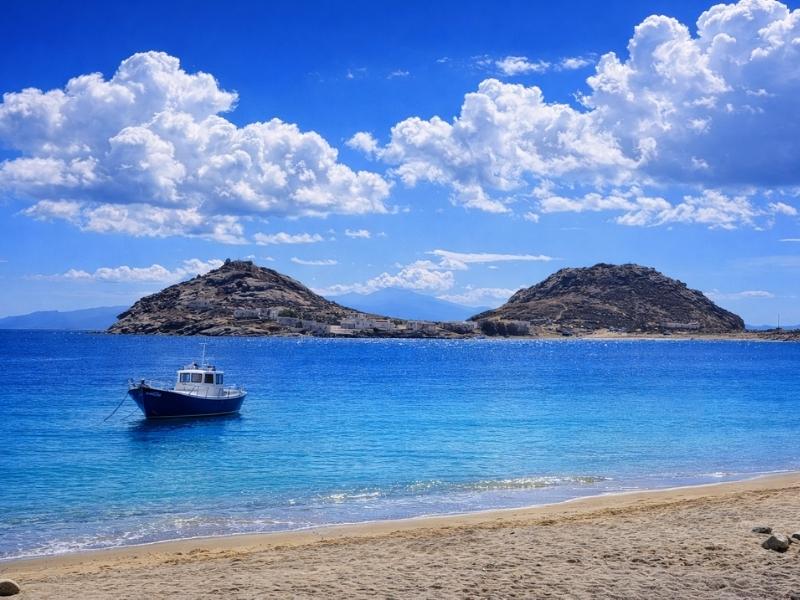
Yes. Mykonos is a very safe destination. The U.S. State Department rates Greece at Level 1 (Exercise Normal Precautions) as of October 2025, the lowest possible risk category. Violent crime is rare. The main safety concerns are practical: petty theft in crowded areas, unlicensed “pirate taxis,” alcohol-related incidents in the nightlife zone, and road safety on scooters and ATVs.
In our experience guiding over 13,500 travelers on the island, the risks that actually materialize are almost always preventable. Crowded areas like Mykonos Town and the popular beach clubs create the usual pickpocket conditions. Keep valuables in a zipped cross-body bag rather than a back pocket or open beach bag. Don’t leave anything unattended on the beach while swimming.
The pirate taxi situation deserves specific attention. Unlicensed drivers operating as unofficial taxis approach tourists at the airport, port, and outside clubs. Beyond overcharging, these drivers are sometimes connected to burglary networks: they learn from pickups exactly when villas are empty, how many people are staying, and what valuables might be present. The information reportedly gets passed to organized theft rings. Book all transfers through your accommodation, a licensed taxi stand, or a reputable transfer company.
Road safety is the other underappreciated risk. Mykonos roads are narrow, winding, and often shared by pedestrians, scooters, ATVs, and cars in various states of driver confidence. The island sees a disproportionate number of tourist injuries from ATV and scooter accidents each year. If you’re not experienced on two wheels or haven’t ridden on narrow European roads, renting a car is the wiser move.
For emergencies: the European emergency number 112 connects you to police, ambulance, and fire services. For non-emergencies, contact the local tourist police or your accommodation. Have your embassy’s contact information saved before you arrive.
Mykonos is generally safe but the combination of alcohol, crowds, and tourist pricing creates specific risks most travel blogs don’t address honestly – our is Mykonos safe guide breaks down what to actually watch out for and what you can stop worrying about.
What Do First-Time Visitors to Mykonos Get Wrong?
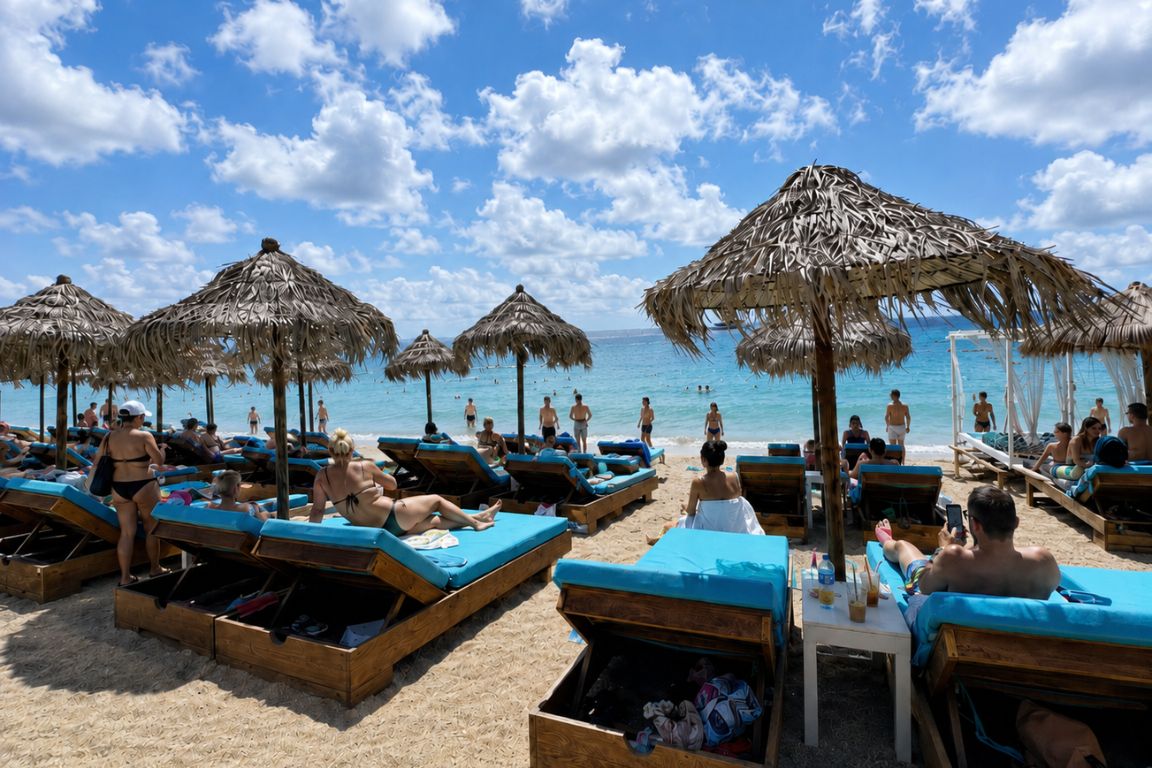 The most common pattern we see is under-budgeting combined with over-scheduling. Travelers arrive having mentally allocated “about €150 a day” and discover on day two that they’ve already spent €300. Separately, they’ve packed too many beaches and clubs into too few days and end up exhausted rather than relaxed. Mykonos rewards slowing down more than it rewards efficiency.
Here are the patterns that come up consistently, based on our work with over 13,500 travelers:
Not booking in advance. This one costs people real money. Hotels in Chora during July and August sell out months ahead. So do the best tables at Scorpios and Nammos. The travelers who book three months out get the properties they want at better rates. The ones who book three weeks out pay more for worse options and often can’t get into the venues they came for.
Trying Paradise Beach on day one. Paradise in peak season is loud, crowded, and high-energy in a way that can be overwhelming before you’ve settled into the island. First-timers often do better starting with Psarou or Ornos – calmer water, more manageable crowds, and saving the party beaches for once they have their footing.
Relying on taxis. The taxi situation in Mykonos is notoriously difficult. Waits are long, licensed taxis are scarce relative to demand, and prices are high. Public buses from Fabrika station handle most major beach routes for a few euros. The water taxi handles the south coast. Using these systems consistently instead of defaulting to taxis saves €50-80 per day on transport alone.
Missing the early mornings. Mykonos Town before 9am is a completely different place. The cobblestones are quiet, the cats are out, the light off the whitewashed walls is at its best, and you can actually see Panagia Paraportiani – the famous five-church complex – without someone’s selfie stick in the frame. Most visitors sleep through this window entirely.
Skipping Delos. It’s one boat ride away. It’s arguably the most significant archaeological site in the Aegean. And it’s consistently undervisited because people assume it will feel like homework. It doesn’t. Walking the ancient ruins in the morning light with the Cyclades around you on every side is the kind of thing you describe differently when you get home than you expected.
Want to make the Mykonos boat party experience actually worth the day rather than just a box ticked on a Greek island checklist? Here’s our Mykonos boat party guide so you pick the right one.
Wondering which tours, beaches, and experiences should take priority on a first Mykonos visit and what can safely wait until you know the island better? This Mykonos tours for first-time visitors guide covers the first-timer decisions most Greece travel blogs treat as obvious.
| Under-budgeting daily costs | Very common | Add 30-40% buffer to initial estimate |
| Not booking accommodation early | Common in peak season | Book 2-3 months ahead for July-August |
| Relying on taxis for all transport | Common | Use Fabrika buses + water taxi system |
| Skipping Delos day trip | Frequent with first-timers | Build it into day 2 or 3 |
| Forgetting toilet paper rule | Universal for non-European visitors | Always use the bin, not the toilet |
| Renting ATVs without experience | Common, often results in injury | Rent a car if not experienced on two wheels |
| Taking pirate taxis from port/airport | Very common for new arrivals | Book transfer in advance through accommodation |
If you are still deciding how to spend a day on the water, start with the boat tour comparison.
Frequently Asked Questions
What is the best month to visit Mykonos?
June and September are the most consistently recommended months. June delivers full summer energy without the extreme crowds and meltemi winds of July-August. September offers warm water, thinner crowds, and lower prices than peak summer. Late May is excellent for budget travelers who don’t need the full beach club scene running at capacity.
How much money do I need per day in Mykonos?
Plan for a minimum of €200-300 per person per day for a mid-range trip covering accommodation, food, transport, and one beach or evening activity. Budget travelers managing hostels, buses, and street food can get by on €65-100. Luxury travelers including beach clubs and 5-star stays should budget €500-1,000+ daily. These estimates reflect 2026 pricing.
Is Mykonos worth visiting?
Yes, for the right traveler. Mykonos offers a combination of world-class beach clubs, genuinely beautiful Cycladic architecture, excellent food, and proximity to the Delos archaeological site that’s hard to match anywhere in Greece. It’s not the right island for everyone – it’s expensive, it’s busy in summer, and it runs on a very particular social rhythm. Travelers who go knowing what it is almost always rate it highly.
Do I need to book beach clubs in advance?
For Scorpios and Nammos in peak season, yes – often weeks in advance. These venues fill up fast and use WhatsApp as their primary booking channel, which tends to be more responsive than their official websites. Mid-tier clubs like Tropicana and Jackie O’ are more walk-in friendly, though prime sunbed rows book out early in the morning.
Is Mykonos LGBTQ+ friendly?
Mykonos is one of the most LGBTQ+ friendly destinations in the Mediterranean, with a long-established gay scene centered around Super Paradise Beach and several venues in Mykonos Town. Jackie O’ at Super Paradise is a particularly well-known inclusive venue. The island has a cosmopolitan, accepting atmosphere that extends across its entire social scene.
What should I know about getting around Mykonos?
The public bus system runs from Fabrika station in Chora to most major beaches for €2-3 per journey and is reliable during the day. The Mykonos Water Taxi from Ornos offers an all-day pass (€20 cash) connecting the main south coast beaches. Taxis are available but expensive and often scarce in peak season. Renting a car gives the most flexibility; avoid ATVs and scooters unless you have genuine experience on two wheels and narrow roads.
Greek tour guide since 2012 · Founder, Mykonos Tours
Alexandros has guided over 13,500 travelers through Mykonos and the Cyclades since founding the agency.
Your next step · optional experience
Choose the anchor for your Mykonos plan
General recommendation — choose an option below to refine it.
Mykonos highlights by bus and on foot
Check your date before arranging the rest of your day. Pair the island drive with a guided walk through Mykonos Town.
3½ hours • English guide • Meet at New Port; hotel pickup excluded. Uneven walking and moderate fitness required.
Choose a date to view the published departure schedule. Final availability and price are confirmed on Viator.
Compare options, fit your day or calculate the cost
Pair the island drive with a guided walk through Mykonos Town. 3½ hours • English guide • Meet at New Port; hotel pickup excluded. Uneven walking and moderate fitness required.
Swim at Rhenia, eat lunch aboard and explore Delos in one 5–6-hour outing. Choose the live English guide option for guided Delos. Admission and optional pickup cost extra. Confirm meeting point the day before; swimming uses a ladder.
Taste Greek coffee, pastries, spreads and souvlaki with a local guide. 2 hours • English • Meet at the Old Port Eurobank ATM. No included pickup; walking and steps. Confirm dietary needs before paying.
Reserve a sunbed at Thalas for a relaxed day beside Super Paradise’s clear water. Day use • Arrive 10am–noon; reservations released after noon. Food, drinks and transport extra. Towels included only in first/second rows. Accompanied minors only.
We may earn a commission from bookings through these links. Your final price and booking conditions are shown by the provider.