Is Mykonos Worth Visiting?
Yes, Mykonos is worth visiting for travelers who want beautiful beaches, iconic Cycladic scenery, vibrant nightlife, and a polished Mediterranean holiday experience, but it rewards the right expectations.
Swim at Rhenia, eat lunch aboard and explore Delos in one 5–6-hour outing. Discover Rhenia and Delos sailing trip ↗
Yes, for the right traveler. Mykonos delivers world-class beaches, genuinely beautiful Cycladic architecture, a beach club scene that has no real rival in the Mediterranean, and the archaeological island of Delos right on its doorstep. It is expensive, it is crowded in peak season, and it does not pretend to be an authentic hidden gem. Go knowing what it is and you’ll rate it highly. Go expecting a quiet, budget-friendly Greek island and you’ll be disappointed.
| Verdict | Worth it for the right traveler, actively wrong for others |
| Best for | Beach clubs, nightlife, Cycladic architecture, Delos day trip |
| Not ideal for | Budget travelers, those seeking authentic local life, families with young children in peak season |
| Mid-range daily budget | €200-300 per person |
| Peak season | July-August (crowded, expensive, meltemi winds) |
| Sweet spot months | Late May, June, September |
| Compared to Santorini | Better beaches, stronger nightlife, less romantic, slightly more expensive overall |
| U.S. State Dept. rating | Level 1: Exercise Normal Precautions |
Booking choice: Choose the live English guide option for guided Delos. Admission and optional pickup cost extra. Confirm meeting point the day before; swimming uses a ladder. Check dates for Rhenia and Delos sailing trip ↗
What Kind of Traveler Actually Loves Mykonos?
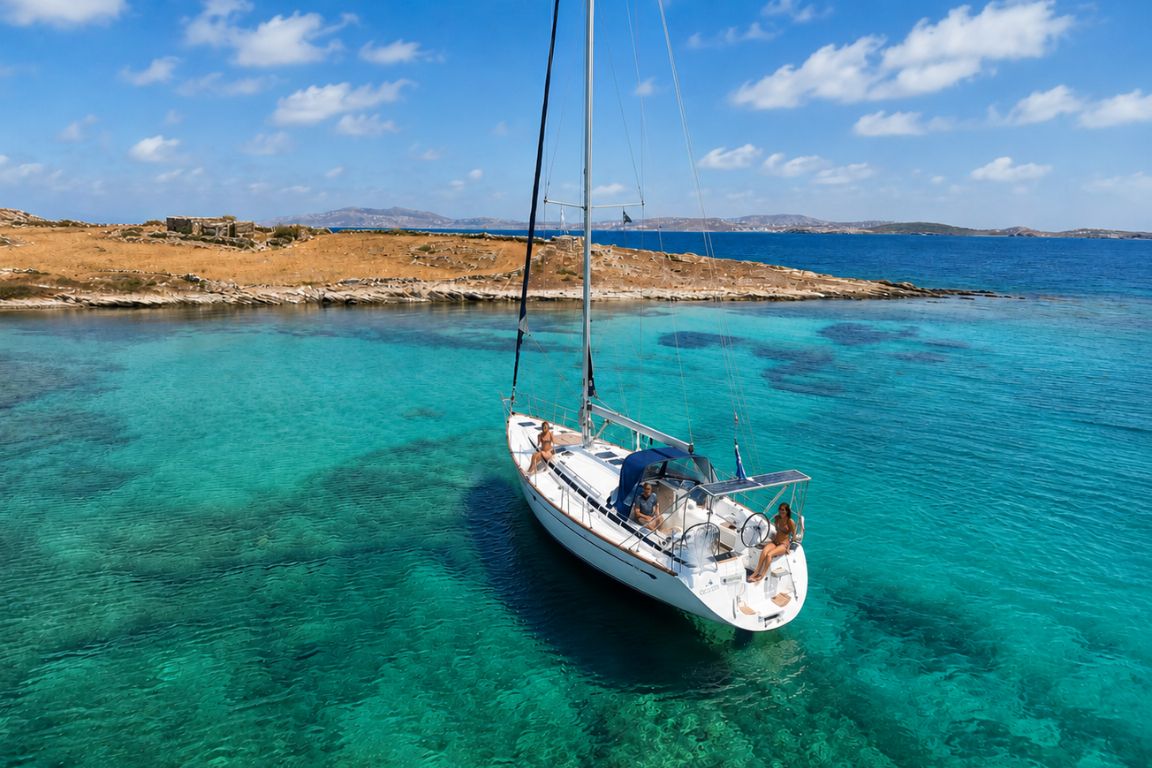 Mykonos rewards travelers who want a high-energy social experience built around excellent beaches, world-class beach clubs, and stylish evenings in a genuinely beautiful town. It suits confident solo travelers, groups of friends, couples looking for a glamorous getaway, and anyone who appreciates the combination of Cycladic architecture and serious nightlife. It does not suit budget backpackers, travelers seeking quiet authenticity, or families with young children in peak season.
The travelers who love Mykonos most are the ones who go knowing exactly what they’re in for. They book Scorpios weeks in advance. They budget properly. They plan their beach days around the water taxi. They understand that the island is not trying to be something humble or undiscovered, and they don’t resent it for that. They walk the alleys of Chora at 8am before the crowds arrive, and they stay out until 2am because the night genuinely warrants it.
The travelers who leave disappointed almost always fall into one of two camps. Either they expected a quiet, affordable Greek island getaway and found something noisier and more expensive than they’d budgeted for. Or they came during August, underestimated the crowds, and spent more time queueing and sweating than actually enjoying themselves. Both outcomes are preventable with the right expectations going in.
From our work guiding over 13,500 travelers through Mykonos and the Cyclades since 2012, the single strongest predictor of a great trip is whether the person came knowing what the island actually is. Not what they hoped it might be. What it actually is.
First time planning a Greek island trip and not sure how to approach Mykonos without overpaying for everything? Here’s our how to plan a trip to Mykonos tours guide so you go in with a clear strategy.
What Does Mykonos Look Like Beyond the Party Reputation?
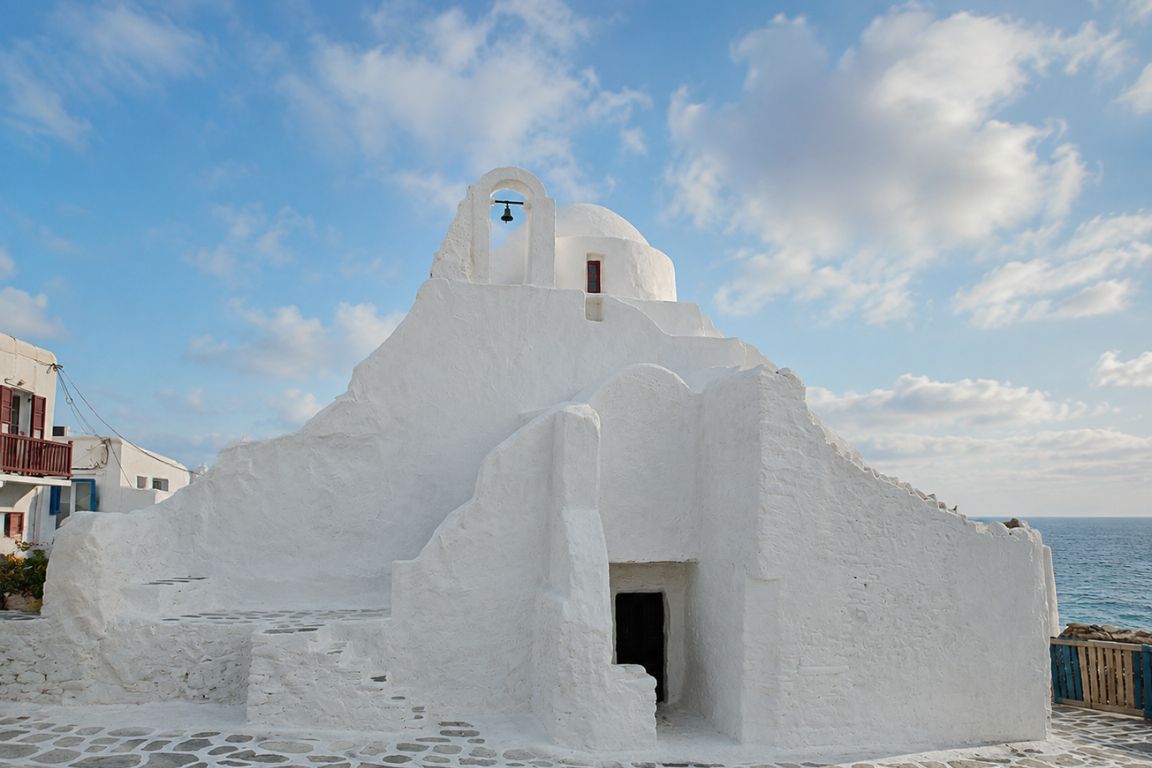 Beneath the beach clubs and the nightlife is a genuinely beautiful Cycladic island with a medieval town designed to get you lost, five interconnected churches that look like they were sculpted from sea foam, 16th-century windmills that still define the skyline, and a UNESCO World Heritage archaeological site a short boat ride off the coast. The party reputation is real. So is everything else.
Mykonos Town, the Chora, is one of the most architecturally distinct towns in the Cyclades. The labyrinthine alleys were not built for charm. They were built to disorient pirates, who needed straight lines to navigate efficiently. The result, unintentionally, is one of the most photogenic street grids in the Mediterranean. Purple bougainvillea drapes over whitewashed walls. Cats sleep on steps. Tiny chapels appear at dead ends with no explanation. Matogianni Street is the tourist spine of it all, lined with boutiques and restaurants, and even that is worth walking slowly.
Not sure whether the famous Mykonos beach club day scene or the late-night bar and club experience actually delivers more for your time and money? Here’s our Mykonos day party vs night party guide so you decide before you commit.
The windmills above Chora are from the 16th century, built during the Venetian period to grind the grain that was traded across the eastern Mediterranean. Seven of them still stand on the hill above Little Venice. They are one of those landmarks that shouldn’t still be moving after you’ve seen a thousand photos of them, and somehow are. The light at dusk off the Aegean below them does something that photographs never quite manage to capture.
Panagia Paraportiani is not one church. It is five, built between the 15th and 17th centuries and merged into a single asymmetrical white mass that looks like it grew out of the rock rather than being constructed on it. It sits at the waterfront edge of the Kastro quarter, and at sunrise with the sea behind it, it is one of the most remarkable pieces of architecture in Greece. Most visitors see it mid-afternoon, surrounded by other visitors. The ones who get up early see something different entirely.
And then there is Delos. A 25-minute boat ride from the old port, a UNESCO World Heritage site, the mythological birthplace of Apollo and Artemis, and one of the most significant archaeological sites in the Aegean. The ancient mosaics, the sacred lake, the Avenue of the Lions: walking through them in the morning silence, with the Cyclades laid out around you in every direction, is the kind of experience that recalibrates your sense of what is old. Most visitors skip it for another beach day. This is a consistent regret we hear after the fact. A sailing day that includes the guided Delos visit is the version that does not require you to arrange the boat separately.
Not sure whether a Mykonos boat party is worth the ticket price or whether it’s just a regular catamaran tour with louder music and cheaper drinks? Check out our Mykonos boat party guide before you book anything.
How Does Mykonos Compare to Santorini?
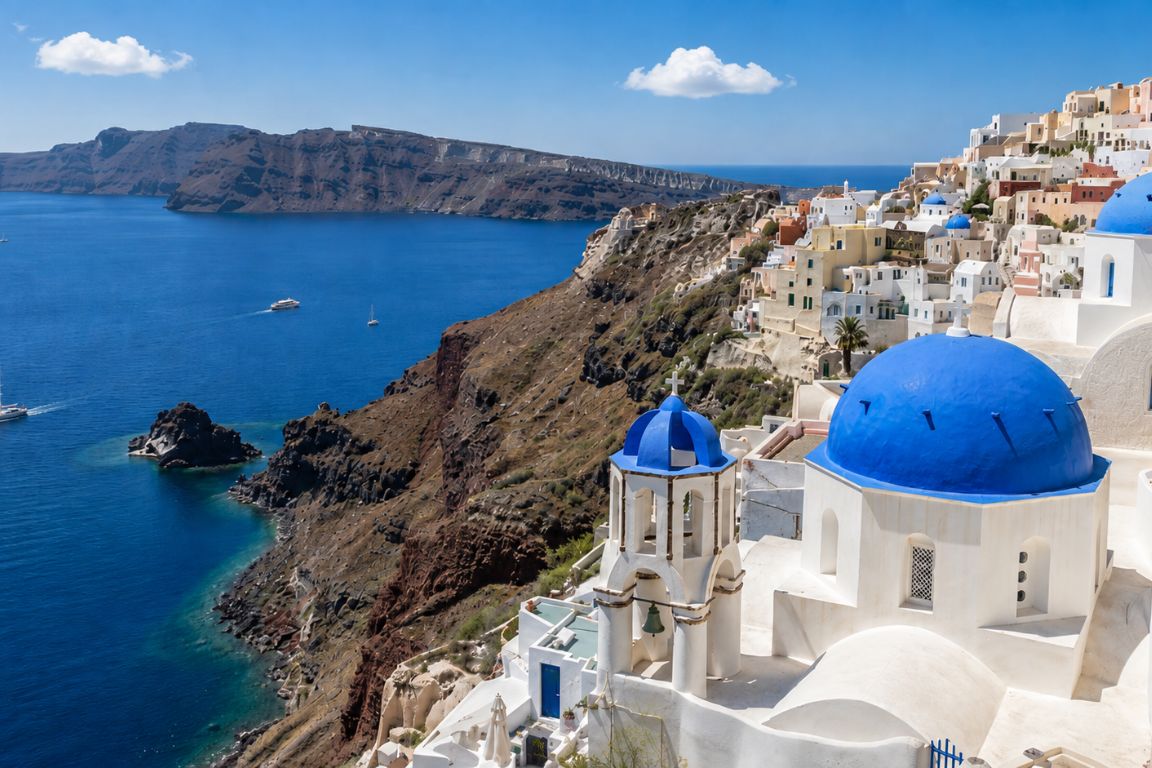 Mykonos and Santorini are often treated as interchangeable, but they serve different travel instincts. Santorini is built for romance, dramatic viewpoints, and slow mornings on a caldera cliff. Mykonos is built for social energy, beaches you can actually swim in, and nights that start late and run long. Both are worth visiting. Choosing between them comes down to what you actually want from a Greek island trip.
On beaches alone, Mykonos wins by a significant margin. Santorini’s beaches are volcanic, dark-sanded, and striking to look at. The water is deep and clear. But they are not the kind of beaches that invite you to spend eight hours on a sunbed with a cocktail and a book. Mykonos beaches are golden sand, shallow entry, and warm Aegean water. Psarou, Ornos, Elia, Paradise, and Super Paradise are genuinely world-class beach days. The ferry between the two islands takes around two hours, so a Greek island trip can easily include both.
| Beaches | Golden sand, swimmable, beach clubs | Volcanic, dramatic, less swimmable |
| Nightlife | World-class, runs until dawn | Wine bars, sunset dining, quiet |
| Architecture | Cycladic labyrinth, windmills | Caldera cliffs, blue domes |
| Romance factor | Present but not the main event | The main event |
| Getting around | Flat, buses and water taxis work well | Cliffs and steps, transfers essential |
| Cost | Expensive across all categories | High for caldera-view accommodation |
| Best for | Groups, solo travelers, beach lovers | Couples, honeymoons, photographers |
| Day trip to antiquities | Delos (25 mins, UNESCO site) | Akrotiri (on-island, impressive) |
The classic itinerary of Athens, Mykonos, and Santorini in a single trip has become so common among American visitors that locals sometimes call it “the American triangle.” It works because the two islands genuinely complement each other rather than duplicate each other. Three to four nights on each is enough to get the best of both without either feeling rushed.
Want an honest comparison before you finalize your Greek island itinerary? Here’s our Mykonos vs Santorini guide so you pick the island that actually fits what you came to Greece to experience.
Is Mykonos Worth the Cost?
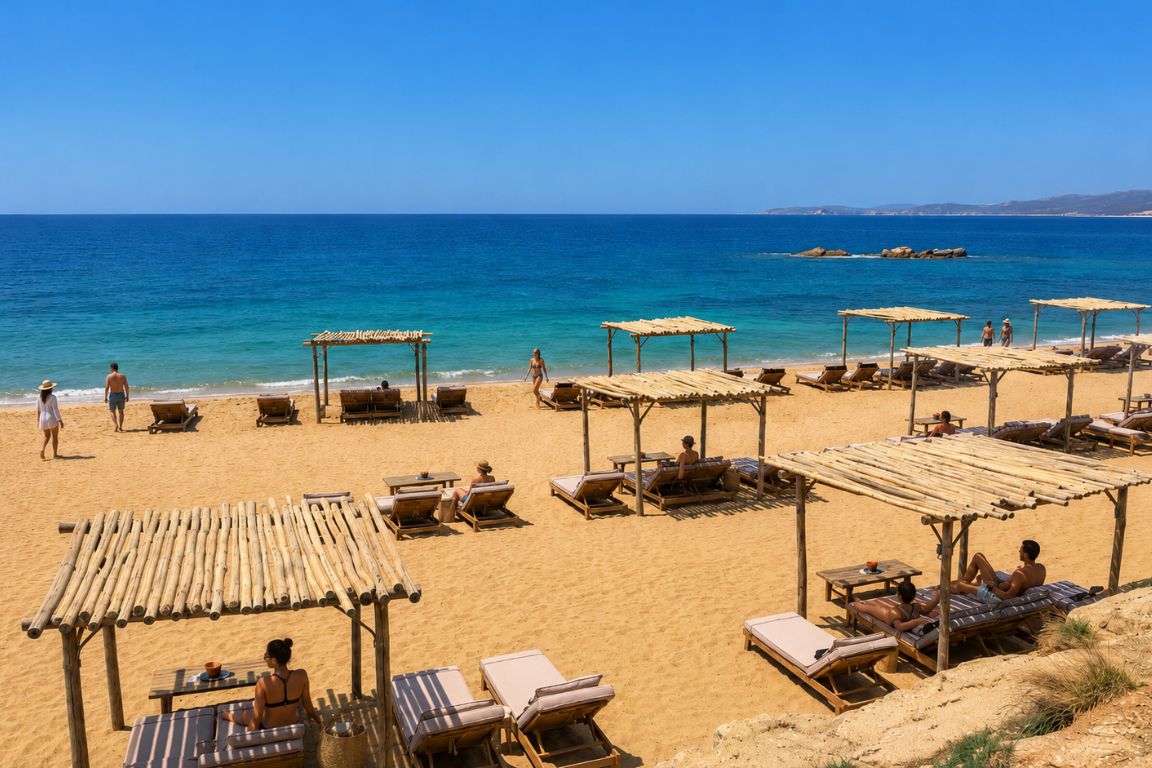 If you budget correctly, yes. If you arrive with the vague sense that it “might be a bit pricey” and no actual number in mind, the island will surprise you in ways that take the edge off the experience. A mid-range trip runs €200-300 per person per day including accommodation, food, and one activity. Luxury travelers with beach club ambitions should plan for €500-1,000 or more. The cost is real. So is the return, if you know where to spend and where to ease off.
The costs that sting most are the ones people don’t see coming. Taxis are expensive and scarce in peak season, running €30-40 minimum per ride. Sunbeds at top beach clubs start at €50 a pair and climb sharply toward the water. Cocktails in Little Venice at sunset run €18-22. The Climate Crisis Resilience Fee adds €1-10 per room per night depending on your hotel category, charged separately at check-in.
Where the money genuinely pays off: a well-chosen beach club day at Scorpios or Nammos is a complete experience, not just a bar tab. The quality of food at Mykonos restaurants, even mid-tier ones, is consistently high. The accommodation, when booked properly and in advance, tends to deliver on its promises in a way that budget islands sometimes don’t. And the island itself, simply as a physical place to spend several days, is beautiful enough to justify the premium for the right traveler.
Where you can ease off without losing anything: use the public bus from Fabrika station rather than taxis for beach transfers (€2-3 versus €30-40). Eat gyros from Sakis Grill House for €7 instead of every meal being a sit-down restaurant. Pick one premium beach club day rather than trying to hit them all. The island rewards selective spending rather than trying to do everything at the highest price point.
Not sure whether visiting Mykonos on a tight budget is even realistic or whether the island is genuinely only for travellers with money to burn? Check out our Mykonos tours on a budget guide before you write it off entirely.
What Are the Best Things to Do in Mykonos?
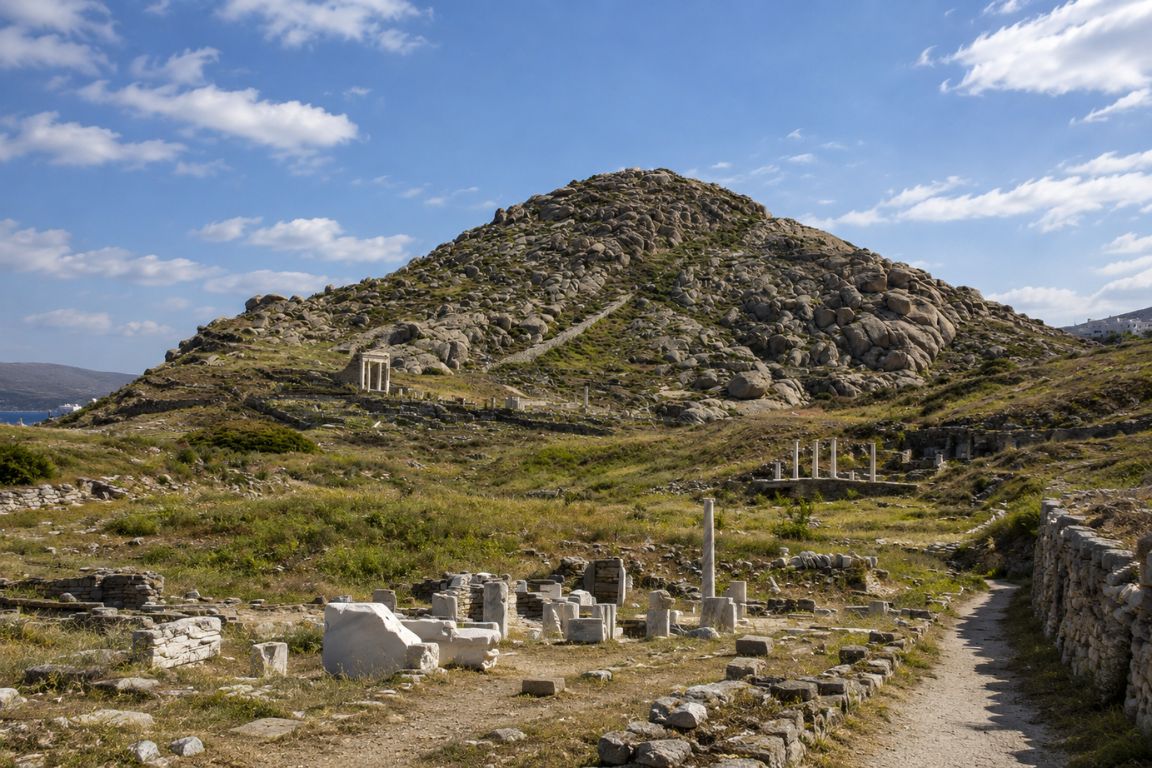 The Delos day trip, a sunset at the windmills with a drink in Little Venice, one properly chosen beach club day, and getting genuinely lost in Mykonos Town at dawn: these four things, done in that spirit, account for what most travelers remember about Mykonos six months after they get home.
Delos first, because it is consistently the most underrated thing on the island’s menu. The mythological birthplace of Apollo. A UNESCO World Heritage site that most visitors skip because they assume it will feel like homework. It doesn’t. The ancient mosaics, the sacred precinct, the view from the top of Mount Kynthos across the Cyclades: none of this requires a particular passion for archaeology to be quietly extraordinary. Morning boats leave from the old port. Go before the afternoon heat and crowds arrive.
The windmills at dusk, followed by Little Venice: this is the Mykonos evening sequence that works every time. The Kato Mili windmills sit above Chora on a small hill, built in the 16th century by Venetians to process the grain trade. By late afternoon the light off the Aegean below them turns into something that has made photographers stay past their planned departure. Walk down to Little Venice afterward, the row of buildings that overhang the sea directly, and have one drink watching the last of the sunset. Then dinner somewhere good in Chora. This is the evening the island was designed for.
For the beach: the south coast is the main event. Psarou and Ornos for calmer water and a more relaxed atmosphere. Paradise and Super Paradise for the full party experience. Elia for a longer, quieter stretch. The Mykonos Water Taxi from Ornos offers an all-day pass for €20 cash, connecting all of them. One properly planned beach club day at a venue like Scorpios at Paraga, which builds from laid-back afternoon swimming through its famous Sunset Ritual with live musicians, is worth more than three rushed half-days at different venues.
And Mykonos Town itself: before 9am, on foot, with no plan. This is when the cats outnumber the tourists, the bougainvillea catches the first light, and the narrow alleys through the Kastro quarter feel like what Mykonos was before it became famous. It lasts about two hours before the crowds arrive. Worth every early alarm.
There’s more to Mykonos than most visitors ever discover beyond the beach clubs and the Little Venice sunset crowd – our what to do in Mykonos tours guide breaks down the experiences worth seeking out and the ones worth skipping.
What Are the Biggest Downsides of Visiting Mykonos?
The three real downsides are cost, crowds in peak season, and the gap between the island’s glamorous image and the more commercial reality on the ground in July and August. None of these are dealbreakers if you go prepared. All three become genuinely unpleasant if you don’t.
Cost is not a surprise to most people by the time they book. But the way costs compound is. A €300 hotel room, a €50 sunbed, a €40 taxi, three cocktails at €20 each: you’re at €450 before you’ve had dinner. Travelers who budget for the accommodation and forget to budget for everything around it consistently find the island more expensive than they planned. The fix is straightforward: a real daily budget, built from actual numbers, before you book.
The crowds in July and August are a different matter. Mykonos draws an estimated three million visitors annually across all categories. In peak summer, the old port area, Matogianni Street, and the popular beaches are genuinely packed in ways that change the character of the island. The narrow alleyways were built to confuse attackers, not to comfortably accommodate thousands of tourists simultaneously. For many people this is exactly the atmosphere they came for: the noise, the movement, the feeling of being at the center of something. For others it tips into exhausting. If you fall into the second camp, late May or September are not compromises. They are genuinely better versions of the same island.
The authenticity question deserves an honest answer. Mykonos does not offer an immersive local Greek experience in the way that smaller Cycladic islands like Tinos, Folegandros, or Sifnos might. The island is heavily oriented toward international tourism. The restaurants along the main strips are aware of their prices. The beach clubs are aware of their brands. This is not a hidden gem that has been discovered. It is a place that has been famous for decades and has built its infrastructure accordingly. Travelers who want to feel they have found something real and unpolished should look at the smaller islands. Travelers who want the best-executed version of a Cycladic beach holiday, with all the trimmings, will find that Mykonos delivers it at a very high level.
When Is Mykonos Worth It (and When Is It Not)?
 Mykonos is worth it when you visit in late May, June, or September with a proper budget, accommodation booked in advance, and a realistic sense of what the island offers. It is less worth it when you arrive in August expecting calm, or on a three-night trip expecting to fit in everything, or with a mid-range budget and a luxury itinerary in mind.
The timing question matters more on Mykonos than on most islands because the experience shifts so dramatically between seasons. June is close to the ideal: everything is open, the crowds are manageable, the meltemi winds haven’t arrived in force, and the water is warm enough for real beach days. September matches June in most respects and sometimes surpasses it: the sea reaches its peak warmth, accommodation prices drop 20-40% from August highs, and the island finds a rhythm that feels less frantic.
| Groups of friends (late 20s-40s) | Strongly positive | Beach clubs, nightlife, social energy all deliver |
| Couples seeking romance | Positive, with caveats | Beautiful setting, but Santorini often edges it for pure romance |
| Solo travelers | Strongly positive | Easy to meet people, social infrastructure built for it |
| Families with young children | Mixed in peak season | Calmer beaches like Ornos work; nightlife orientation can feel at odds |
| Budget travelers | Often disappointed | Cost structure works against the experience at lower spend levels |
| Culture and history seekers | Positive if Delos is included | Delos alone justifies the trip for this traveler type |
| Travelers seeking authentic local life | Better served elsewhere | Tinos, Sifnos, or Folegandros offer more of this |
The honest answer to “is Mykonos worth it” is that this is the wrong question. The right question is whether Mykonos is worth it for you specifically. For the right kind of trip, timed right, budgeted honestly, it is one of the most complete and well-executed island experiences in the Mediterranean. For the wrong expectations, it can feel like paying premium prices for a less genuine version of Greece than you could have found elsewhere.
We’ve been showing travelers the real Mykonos since 2012, and what that means in practice is helping people figure out whether Mykonos is actually the right island for their specific trip before they book. Sometimes the answer is yes. Sometimes we suggest pairing it with Paros or Naxos. Occasionally we tell someone that Folegandros will make them happier. Look at a private jeep tour if you want the day away from the main strips, or a food tour if you would rather stay in town.
Trying to figure out which months give you the best combination of weather, open businesses, and manageable tourist numbers on the island? Check out our best time to visit Mykonos tours guide before you lock in your dates.
Frequently Asked Questions
Is Mykonos overrated?
Partly, in specific contexts. In July and August, the peak crowds and heavily commercialized strip restaurants can feel out of proportion to the prices charged. In June or September, with a proper budget and the right expectations, it is rarely experienced as overrated. The island is exactly what it presents itself as: expensive, glamorous, social, and very beautiful. The disappointment comes when travelers expect something different rather than something less.
Is Mykonos good for couples?
Yes, with a caveat. Mykonos has beautiful settings for couples: Little Venice at sunset, quiet morning walks through Chora, excellent restaurants, boutique hotels with sea views. The caveat is that its energy is more social and group-oriented than purely romantic. Couples who want maximum romance often find Santorini edges it. Couples who want a mix of beach days, good food, and lively evenings usually love Mykonos.
Is Mykonos good for solo travelers?
One of the best solo destinations in the Mediterranean. The island’s social infrastructure, including beach clubs, a cosmopolitan nightlife scene, and a general atmosphere of openness, makes meeting people easy and natural. Solo travelers consistently rate it highly, particularly outside of peak August crowds.
Should I visit Mykonos or a quieter Greek island?
If you want nightlife, world-class beaches, and a buzzing social scene: Mykonos. If you want authentic local life, lower prices, and a quieter pace: islands like Paros, Naxos, Sifnos, or Folegandros. Many travelers combine one or two days on Mykonos with several days on a quieter island for the best of both.
Is one day enough for Mykonos?
A day is enough to see the windmills, walk Chora, and have lunch. It is not enough to understand why people come back. The island needs at least three nights, ideally four, to reveal itself properly: a beach day, an evening in Little Venice, an early morning walk, and the Delos trip. One day is a preview, not the experience.
What is Mykonos actually known for?
Officially: Cycladic architecture, the iconic windmills, world-class beaches, and the nearby Delos archaeological site. In practice: one of the best beach club scenes in the world, a nightlife reputation that predates most of its competitors, and a particular glamorous energy that draws a cosmopolitan international crowd every summer.
Greek tour guide since 2012 · Founder, Mykonos Tours
Alexandros has guided over 13,500 travelers through Mykonos and the Cyclades since founding the agency.
Your next step · optional experience
Choose what would make the trip worthwhile
General recommendation — choose an option below to refine it.
Rhenia sailing and Delos visit
Check your date before arranging the rest of your day. Swim at Rhenia, eat lunch aboard and explore Delos in one 5–6-hour outing.
Choose the live English guide option for guided Delos. Admission and optional pickup cost extra. Confirm meeting point the day before; swimming uses a ladder.
Choose a date to view the published departure schedule. Final availability and price are confirmed on Viator.
Compare options, fit your day or calculate the cost
Swim at Rhenia, eat lunch aboard and explore Delos in one 5–6-hour outing. Choose the live English guide option for guided Delos. Admission and optional pickup cost extra. Confirm meeting point the day before; swimming uses a ladder.
Taste Greek coffee, pastries, spreads and souvlaki with a local guide. 2 hours • English • Meet at the Old Port Eurobank ATM. No included pickup; walking and steps. Confirm dietary needs before paying.
Combine a live DJ, open bar and a swimming stop in one afternoon on the water. 4 hours • 18+ • Old Port departure; transfers excluded. Bring a towel; confirm swimming and health suitability with the operator.
Pair the island drive with a guided walk through Mykonos Town. 3½ hours • English guide • Meet at New Port; hotel pickup excluded. Uneven walking and moderate fitness required.
We may earn a commission from bookings through these links. Your final price and booking conditions are shown by the provider.